
to leave a comment.
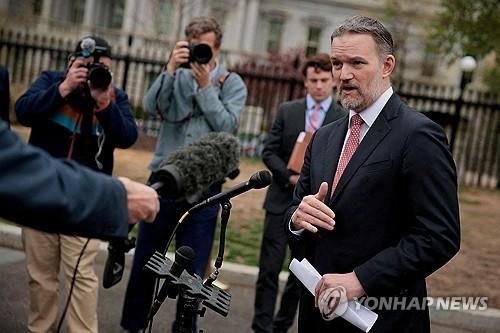
Jamison Greer, the U.S. Trade Representative (USTR), stated on the 26th (local time) that it is possible to re-impose the 'global 10% tariff' currently levied by the U.S. Donald Trump administration, even after its legal deadline expires in July.
According to the U.S. daily Wall Street Journal (WSJ), Representative Greer stated at an event of the Council on Foreign Relations (CFR) on that day, "If you look at the relevant legal provisions, it specifies when (the tariff) expires, but it doesn't say when it can be done again," expressing the opinion that re-imposition is legally possible.
He did not comment on whether the Trump administration would actually pursue the re-imposition of the 'global 10% tariff,' but said it was "inconceivable" that Congress, which enacted the law, intended to limit the President to imposing tariffs under Section 122 of the 'Trade Act of 1974' only once during their term.
The maximum period for the U.S. administration to impose tariffs under Section 122 of the Trade Act is 150 days, and it expires in late July.
This provision can be invoked by the President in cases of a large and serious U.S. balance of payments deficit, an imminent and significant risk of depreciation of the U.S. dollar, or situations requiring international cooperation to correct international balance of payments imbalances.
Representative Greer added that the USTR is still "highly focused" on conducting investigations that will serve as the basis for tariffs to replace the current 'global 10% universal tariff.'
He had previously stated that such alternative tariffs would be imposed in July under Section 301 of the Trade Act.
Section 301 of the Trade Act, a powerful U.S. trade weapon, is a provision that grants the USTR broad retaliatory authority to protect the interests of U.S. commerce from unfair, discriminatory, or unreasonable trade policies and practices of foreign governments.
Currently, the Trump administration is conducting investigations under Section 301 of the Trade Act on two issues: overproduction and forced labor.
Previously, after the Federal Supreme Court ruled in February this year that the imposition of reciprocal tariffs based on the International Emergency Economic Powers Act (IEEPA) was illegal, President Trump is now imposing a '10% global tariff' based on Section 122 of the Trade Act.
On the 7th, the U.S. Court of International Trade (USCIT) ruled that the imposition of the '10% global tariff' was illegal, but on the 12th, the Federal Court of Appeals issued a decision to temporarily suspend the enforcement of the first-instance ruling, so the imposition is currently continuing.
Newsletter
Get key news delivered to your email every morning
to leave a comment.