
to leave a comment.
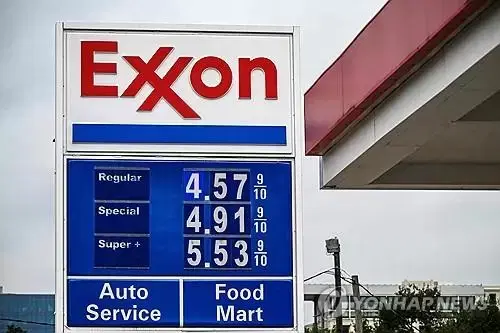
A gas station price sign in Houston, Texas, USA
International oil prices surged on the 29th (local time) amid growing concerns that energy supply disruptions would be prolonged beyond expectations as peace talks between the United States and Iran fell into a stalemate.
On this day, the closing price of Brent crude futures for June delivery on the ICE Futures Exchange rose 6.1% from the previous session to $118.03 per barrel.
Brent crude futures reached an intraday high of $119.76 per barrel on this day, marking the highest level in approximately four years since June 2022.
On the New York Mercantile Exchange, the closing price of West Texas Intermediate (WTI) crude futures for June delivery rose 6.95% from the previous session to $106.88 per barrel.
The Wall Street Journal (WSJ) reported yesterday that US President Donald Trump had instructed his aides to prepare for a long-term naval blockade against Iran to achieve Iran's nuclear disarmament.
News that President Trump met with refinery executives yesterday to share the situation that the naval blockade against Iran could continue for several more months and discuss the impact on the energy market and countermeasures also fueled concerns about prolonged high oil prices.
After the start of the Iran War, Iran blockaded the Strait of Hormuz, a global energy shipping lane. The US then initiated a naval blockade against Iran, preventing Iran-related vessels from entering and exiting the strait and nearby waters. With the second round of peace talks collapsing, diplomatic negotiations between the two countries are in a stalemate.
The US Energy Information Administration (EIA) announced today that US crude oil inventories as of the 24th decreased by 6.2 million barrels from the previous week to 459.5 million barrels.
The larger-than-expected decrease in US crude oil inventories significantly pushed up WTI prices.
Market participants evaluated yesterday's withdrawal of the UAE from OPEC as a factor that could increase crude oil production, but they believe that the impact on oil prices will be limited in the short term, given that the Strait of Hormuz is virtually blockaded.
Callum Macpherson, Head of Commodities at Investec, commented, "At this point, OPEC's production limits are not restricting the production of oil-producing countries in the Middle East." He added, "While this decision is not surprising given that the UAE has expressed dissatisfaction with production limits and the possibility of its withdrawal from OPEC has been raised, the timing of the withdrawal decision is noteworthy considering the current regional situation."
Newsletter
Get key news delivered to your email every morning
to leave a comment.