
to leave a comment.
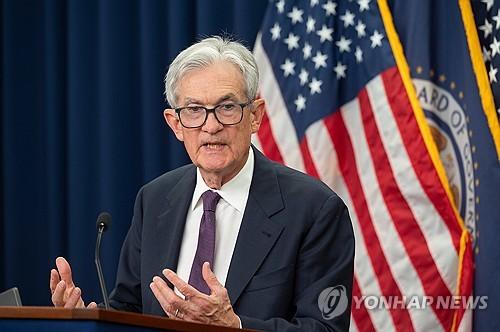
Decides to remain a board member for the time being after his term as chairman ends next month... seemingly fearing 'retaliation'
Despite his conservative tendencies, having worked in investment banking and as a financial official, he leaves behind an 'anti-Trump' image.
The last year, an 'unprecedented' period of clashes with Trump, marks a 'period of hardship' for the U.S. central bank.
U.S. President Donald Trump arbitrarily invents middle names when referring to people he dislikes.
For example, he called former Republican Federal House Representative Marjorie Taylor Greene, who was once an ardent supporter but then turned against him, 'Marjorie Traitor Brown' (implying Greene has faded).
President Trump habitually calls Jerome Powell, the Federal Reserve (Fed) Chairman, who is nearing the end of his 8-year term, 'Jerome Too Late Powell'.
This expression was first used by President Trump on the social media platform Truth Social in May last year, expressing his dissatisfaction that Chairman Powell 'responded too late' despite his repeated demands for interest rate cuts.
Chairman Powell, who came from a U.S. Wall Street investment bank and served as Under Secretary of the Treasury in the George H.W. Bush administration, became a Fed governor in 2012 after being nominated by then-President Barack Obama.
A conservative Republican, Chairman Powell took office in 2018, succeeding former Chair Janet Yellen. He was appointed by President Trump during his first term.
Then, in 2022, then-President Joe Biden reappointed him, allowing him to serve as Fed Chair for another four years. His term expires on the 15th of next month.
In particular, the last year of his term was a period of trial and resistance for Chairman Powell personally. For the Fed, the U.S. central bank, it was a time when unprecedented scenes unfolded continuously, pushing its value as an independent entity to the brink.
Chairman Powell faced pressure to cut interest rates immediately upon re-encountering President Trump, his appointer, who returned to the White House in January last year.
At that time, the U.S. benchmark interest rate was 4.25-4.50%. In the process of overcoming the 'COVID-19 pandemic,' the Fed maintained virtually zero interest rates (0.00-0.25%) in 2020-2021.
The large-scale funds released at that time stimulated inflation, and he pursued hawkish policies, sharply raising interest rates to the 5% range to curb soaring prices and tighten liquidity.
President Trump judged interest rates to be too high. Believing that government debt should be reduced by lowering Treasury interest rates for a massive tax cut policy, he still argues that interest rates should be lowered to the 1% range.
As the head of the central bank pursuing price stability and full employment, Chairman Powell ignored President Trump's demands. He froze interest rates five consecutive times from January to July last year.
President Trump, who had complained about the interest rate freeze, saying, "He (Powell) doesn't get along with me," eventually started calling Chairman Powell "this too-late guy" from May and showered him with harsh criticism, calling him an "idiot who knows nothing."
President Trump's pressure on Chairman Powell was not limited to words. He openly hinted at his dismissal and took 'concrete action' by raising issues with the cost of renovating the Fed building in Washington D.C.
President Trump's visit to the Fed building in July last year under the pretext of inspecting the construction site was unusual. Previous presidents had refrained from such actions out of respect for the Fed's independence.
President Trump stood side by side with Chairman Powell in front of cameras, both wearing hard hats. The construction cost was seen as an excuse, and the real intention was interpreted as pressure to cut interest rates.
The Fed lowered interest rates three consecutive times by 0.25 percentage points each from September to December last year. This was merely in line with market expectations, considering inflation and employment conditions, and fell short of President Trump's hopes for a significant cut.
In early August last year, President Trump appointed his close aide, Steven Myron, who was serving as White House National Economic Council Director, as a Fed governor to fill a vacancy left by his predecessor's resignation.
At the end of the same month, he abruptly notified Lisa Cook, a Fed governor considered a hawk, of her dismissal, citing evidence of mortgage fraud. This was unprecedented in history.
By appointing a White House aide as a Fed governor and deciding to dismiss an existing Fed governor whose views differed from his own before any judicial ruling, these two personnel decisions were seen as undermining the Fed's independence.
In the case of Governor Cook's dismissal, she faced a lawsuit amid criticism that it lacked legitimacy. This case is awaiting a final decision from the Supreme Court, and U.S. media observes that there is a high possibility that a decision will be made to maintain her position as a governor.
Chairman Powell attended the Supreme Court's public hearing for Governor Cook's case, sharing a similar plight. He explained the reason for his attendance, saying, "This case is probably the most important legal case in the Fed's 113-year history."
The relationship between President Trump and Chairman Powell, who had clashed on every issue, spiraled into crisis when the U.S. Department of Justice initiated an investigation into Chairman Powell earlier this year concerning alleged overspending on the Fed building renovation.
On January 11, Chairman Powell disclosed, "I received a grand jury subpoena and a threat of criminal indictment from the Department of Justice on the 9th regarding my congressional testimony last June concerning the renovation of the Fed building."
The initiation of an investigation into a Fed chair was unprecedented. It was equally unprecedented for a Fed chair to issue a video statement directly criticizing the president who appointed him.
Chairman Powell directly criticized President Trump, stating, "The threat of criminal indictment is a result of the Fed having determined interest rates based on what it judged to be most in the public interest, rather than following the President's preferences."
This investigation was awkwardly suspended. This was because it became an obstacle to the federal Senate confirmation process for Kevin Warsh, Chairman Powell's successor candidate. Nevertheless, this incident will not be erased from the Fed's 'history of suffering.'
On the 29th (local time), Chairman Powell held his final press conference as chairman, explaining the results of the Federal Open Market Committee (FOMC) meeting, and did not hide his concern that the Fed's independence was "at risk."
He stated that he had recently been informed by the Department of Justice of the termination of the investigation, saying, "I am encouraged by recent developments and am carefully watching the ongoing process."
However, he emphasized, "I have stated that I will not leave the board until this investigation is transparently, finally, and completely concluded, and I still adhere to that."
Although it is customary for a Fed chair to step down and relinquish the remainder of their board term after their chairmanship ends, Chairman Powell said he would remain a board member for the time being. He can serve as a Fed governor until January 2028 at the latest.
This is interpreted as a judgment that the Trump administration's offensive against the Fed, using the building renovation costs as leverage, is not entirely over.
Chairman Powell said, "My concern is a series of legal attacks on the Fed," adding, "This threatens our ability to conduct monetary policy without political considerations."
Furthermore, considering the Trump administration's 'retaliation against political opponents' stance, it can also be inferred that he considered the possibility of the investigation being reopened after his retirement, and civil liability claims following separately.
Previously, when asked what he would do if he remained a board member after his chairmanship ended, President Trump replied on the 15th, "I should fire him."
Chairman Powell stated, "I will continue to perform my duties as a board member for the time being," and "I plan to quietly fulfill my responsibilities," leaving room for another clash with President Trump, who vowed to fire him from the board.
Newsletter
Get key news delivered to your email every morning
to leave a comment.