
to leave a comment.
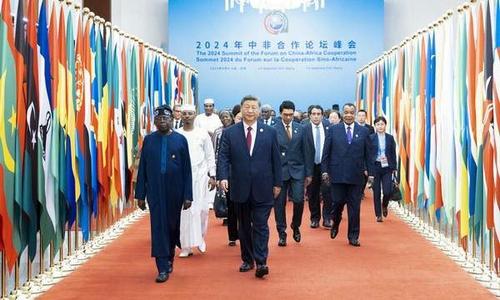
20 more countries added to the existing 33 zero-tariff beneficiaries... Eswatini excluded
China will expand the temporary 'zero-tariff measure' to 53 African countries with which it has diplomatic relations starting next month, aiming to broaden economic cooperation.
According to China's state-run Xinhua News Agency on the 29th, the Customs Tariff Commission of the State Council announced yesterday that from May 1st to April 30th, 2028, 'zero-tariffs' in the form of preferential tariff rates will be applied to 20 additional African countries that have diplomatic relations with China, beyond the existing 33 least developed countries already benefiting from zero-tariff treatment.
However, the Customs Tariff Commission explained that for items subject to Tariff Rate Quotas (TRQ), the tariff rate will be reduced to 0% only for quantities within the quota, while existing tariffs will be maintained for quantities exceeding the quota.
During this period, China also plans to continue promoting the signing of economic partnership agreements with African countries for common development.
Previously, China has been implementing zero tariffs on all items for 33 least developed African countries that have diplomatic relations with China since December 1, 2024.
As a result, among the 54 African UN member states, all countries except Eswatini, which maintains diplomatic relations with Taiwan, are included in China's zero-tariff benefit.
China's Ministry of Commerce stated that this measure is aimed at expanding opening-up and deepening China-Africa cooperation, and will provide new impetus for trade and investment cooperation.
It also emphasized that on the occasion of the 70th anniversary of diplomatic relations between China and Africa, cooperation, including the signing of economic partnership agreements, will continue to be expanded.
This measure is interpreted as a strategic move to expand influence in the so-called 'Global South' (primarily emerging and developing countries in the Southern Hemisphere) in response to a US-centric international order.
Analysis suggests that the underlying intention is to strengthen economic cooperation and broaden the base of friendship by opening up markets to African countries.
Notably, Eswatini, which has diplomatic ties with Taiwan, was excluded from this measure.
This is interpreted as a strategy to limit Taiwan's diplomatic space while gaining an advantage in the competition for influence in Africa.
Previously, Taiwan's President Lai Ching-te sought to visit Eswatini, Taiwan's sole diplomatic ally in Africa, but the plan was thwarted when Seychelles, Mauritius, and Madagascar denied permission for airspace transit.
The Taiwanese government claimed that the Chinese authorities exerted strong pressure, including economic coercion, on these three countries.
Newsletter
Get key news delivered to your email every morning
to leave a comment.