
to leave a comment.
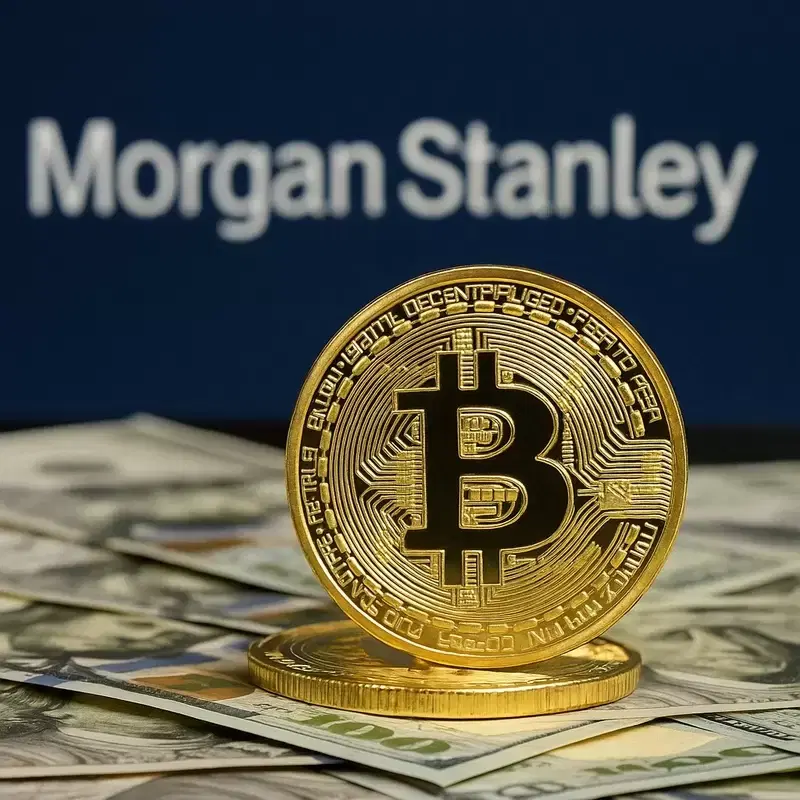
▲ Bitcoin (BTC), Morgan Stanley/ChatGPT generated image
It has been confirmed that the Bitcoin assets held by major Wall Street investment bank Morgan Stanley have exceeded $100 million, marking the full-fledged entry of traditional finance into the virtual asset market.
Crypto media outlet U.Today reported on April 21 (local time), citing data from on-chain data analytics platform Arkham, that Morgan Stanley currently holds Bitcoin (BTC) worth $138.54 million. This is the largest amount among banks registered on Arkham.
Earlier this month, Morgan Stanley became the first Wall Street investment bank to launch a Bitcoin-tracking ETF (MSBT), rapidly expanding its presence in the virtual asset market. The product attracted over $100 million in its first week after its launch on April 8, demonstrating strong market interest.
This move indicates that traditional financial institutions are embracing blockchain technology and tokenization infrastructure as core components of the existing financial system. Morgan Stanley recently also launched a digital asset pilot program in collaboration with Zero Hash, supporting major cryptocurrency transactions for eTrade customers.
Major European bank Deutsche Bank also recently emphasized in a report that the adoption of virtual assets in the U.S. is rapidly recovering, and Bitcoin remains a key investment asset driving the market.
Bitcoin showed a bullish trend, rising to $76,926 during Tuesday's trading, but has since fluctuated around $75,890. This is approximately 40% lower than its all-time high of $126,000 recorded last October.
Market observers predict a high possibility that Bitcoin will challenge its previous all-time high as institutional investor demand gradually recovers. Notably, the inclusion of assets by major financial firms like Morgan Stanley is acting as a key variable in boosting market confidence.
Morgan Stanley plans to enhance its asset management services by leveraging on-chain finance in the future. Its strategy to use blockchain not as a technology to replace the existing financial order, but as an infrastructure to improve and expand it, is becoming clear. The entry of traditional financial giants into the virtual asset market is now evaluated to have moved beyond the testing phase and into actual asset management.
*Disclaimer: This article is for investment reference only, and we are not responsible for any investment losses based on it. The content should be interpreted for informational purposes only.*
Newsletter
Get key news delivered to your email every morning
to leave a comment.