
to leave a comment.
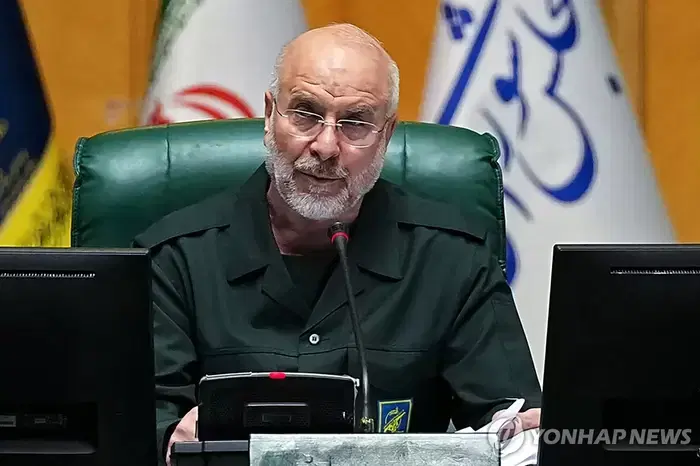
Mohammad Bagher Ghalibaf, Speaker of Parliament
Mohammad Bagher Ghalibaf, Speaker of Parliament, representing Iran in the peace negotiations with the United States, stated that while there has been some progress in the negotiations, a final agreement is still a long way off.
According to foreign media outlets including AFP and the Wall Street Journal (WSJ), Speaker Ghalibaf said in a speech broadcast on Iranian state TV in the early hours of the 19th (local time), "We are far from a final agreement."
He emphasized that "there has been progress in the negotiations, but many disagreements still exist, and several fundamental issues remain," highlighting that the differences between the two sides have not yet been resolved.
Regarding the background of the ceasefire, Speaker Ghalibaf claimed that US President Donald Trump requested the ceasefire because Iran had gained the upper hand on the battlefield.
He asserted, "We have not completely destroyed the enemy, and they still possess funds and weapons," adding, "But strategically, they are defeated compared to us."
Speaker Ghalibaf then strongly criticized the US blockade measures, stating that Iran controls the passage of all vessels through the Strait of Hormuz in relation to the escalating tensions in the strait.
He characterized the US decision to impose a blockade as "foolish and ignorant" and warned, "If the blockade is not lifted, passage through the Strait of Hormuz will undoubtedly be restricted."
He also added that a message was conveyed through Pakistan's military leadership, which is mediating negotiations between Iran and the US, stating that "the enemy should not take measures such as a naval blockade, which violates the ceasefire agreement."
An advertisement billboard related to the Strait of Hormuz in Tehran, the capital of Iran
Ahead of the second face-to-face peace negotiations between the United States and Iran, military tensions surrounding the Strait of Hormuz are escalating once again.
After Iran announced the 'temporary opening' of the Strait of Hormuz on the 17th, more than 10 oil tankers passed through the strait, but the situation rapidly changed the next day when Iran's Islamic Revolutionary Guard Corps (IRGC) declared a re-blockade, stating, "We will not allow passage until the US lifts the naval blockade."
Subsequently, reports of vessel attacks have been continuous near the strait, increasing concerns about maritime safety.
The United States and Iran have accepted Pakistan's proposed 'two-week ceasefire plan' and are seeking a peace agreement with a deadline of the 21st (US Eastern Time, 22nd local Iranian time).
Newsletter
Get key news delivered to your email every morning