
to leave a comment.
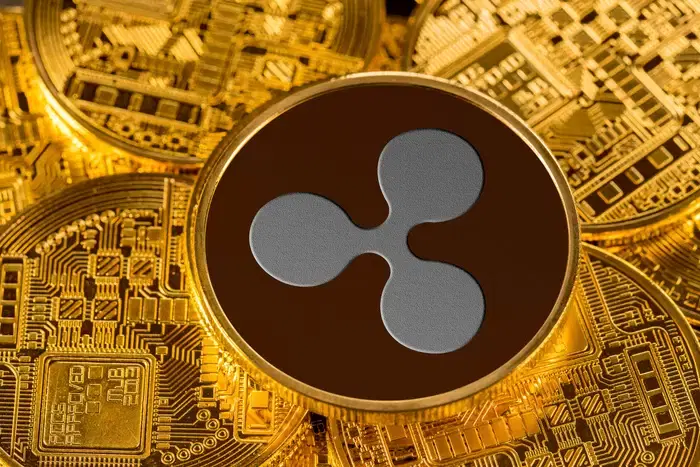
▲ Ripple (XRP) ©Go Da-sol
While investors continue to hold rosy expectations for Ripple (XRP), currently trading around the $1.50 mark, a cautious view suggests that its upward potential may be capped at around $4 due to structural limitations.
According to the investment media The Motley Fool on October 2 (local time), Ripple has never surpassed its all-time high of $3.84 during its more than 14 years of trading. Even during periods of explosive rallies, surging 275% in 2021 and 238% in 2024, and heightened expectations for pro-crypto policies, its highest record remained at $3.65. For this reason, the market points out that $4 is not a floor but effectively an unbreakable ceiling.
The biggest obstacle is the enormous total supply of 100 billion units. Some investors expect Ripple to rise to $10, $100, and even $1,000 in the future, but this is far from realistic calculations. If Ripple reaches $10, its potential market capitalization would swell to $1 trillion, approaching approximately 60% of Bitcoin's (BTC) market cap, surpassing Ethereum (ETH) to become the second-largest by market cap.
If the price skyrockets to $100, the market cap would reach $10 trillion, a figure that would exceed the market capitalization of all publicly traded companies worldwide. The calculation that a single crypto asset like XRP could become more valuable than the combined market caps of Apple and Nvidia is realistically unconvincing.
A sense of crisis is also detected in terms of its inherent utility. XRP has served as a bridge currency supporting cross-border remittance networks, but it has the disadvantage of extreme price volatility. Consequently, stablecoins, which are pegged 1:1 to the US dollar and have stable value, are rapidly replacing its traditional role, narrowing its position.
The media noted that while Ripple's upward potential itself cannot be denied, its realistic ceiling is likely to remain around $4. Given its history of failing to break $3.84 for over a decade, the advice is to significantly lower expectations rather than betting on unrealistic ultra-high price forecasts.
*Disclaimer: This article is for investment reference only, and we are not responsible for any investment losses based on it. The content should be interpreted for informational purposes only.*
Newsletter
Get key news delivered to your email every morning
to leave a comment.