
to leave a comment.
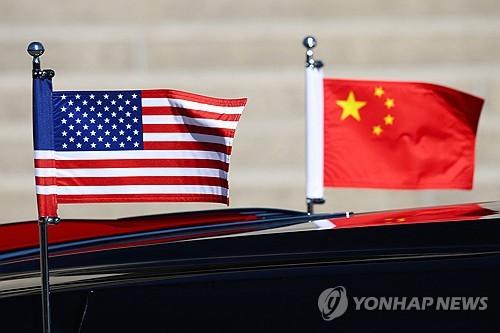
Jamie Greir, a representative of the United States Trade Representative (USTR), announced on the 29th (local time) that when the U.S. government conducts an investigation to consider imposing tariffs on excess industrial production, it will take into account the tariff caps agreed upon in trade agreements with other countries.
According to Reuters, Greir told reporters ahead of the G20 Trade Ministers' Meeting, "I don't want to prematurely comment on the (overproduction investigation) report and proposed measures, but we value such (trade) agreements and will certainly consider them when reviewing the report's conclusions."
The U.S. government is investigating, based on Section 301 of the Trade Act, focusing on the overproduction capacity of major trading partners, and tariffs may be imposed as a result. While this investigation targets major trading partners, China is the key target.
At the G20 Finance Ministers' Meeting held in the U.S. earlier this month, countermeasures against overproduction were discussed, and all G20 member countries except China agreed with the U.S.'s policy direction. In particular, the European Union (EU), which has significant concerns that its domestic industries are being harmed by low-priced imports of Chinese overproduced goods, is aligning with this.
Greir's remarks today can be seen as an intention to broaden the basis for cooperation on China's overproduction problem by leaving room to mitigate the impact of tariff measures on agreement countries other than China in investigations virtually targeting China.
In this regard, the U.S. investigation into overproduction capacity, which contemplates imposing additional tariffs, could become another trade pressure on China.
Previously, the U.S. investigated 60 economic zones under Section 301 of the Trade Act, citing insufficient implementation of the ban on imports of forced labor products, and proposed additional tariffs of 10.0-12.5%. This proposal is also interpreted as primarily targeting China.
Newsletter
Get key news delivered to your email every morning
to leave a comment.