
to leave a comment.
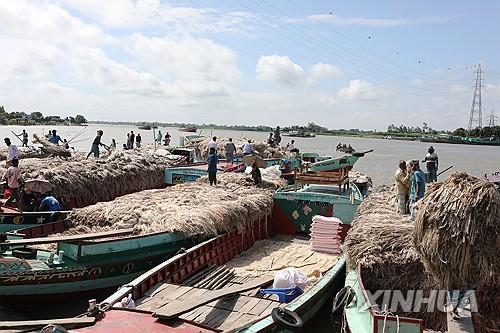
Tariffs increased to protect domestic industry... Bangladesh side protests "unilateral measure"
India has further raised anti-dumping duties on jute products from neighboring Bangladesh to protect its domestic jute industry.
According to Bangladeshi media such as Dhaka Tribune on the 30th, the Indian Ministry of Finance announced on the 24th through a notification that it would impose anti-dumping duties of 59 to 445 dollars (approximately 80,000 to 600,000 won) per ton (t) on jute yarn, twine, sacks, and fabric from Bangladesh, and has begun implementation.
The Indian authorities received a petition from their domestic industry in June last year requesting an investigation into whether Bangladeshi and Nepalese jute product companies were dumping products in the Indian market, and launched an investigation. Three months ago, they concluded that Bangladeshi companies were continuing to sell jute products at low prices in India.
Previously, to protect its domestic jute industry, Indian authorities had imposed anti-dumping duties of 19 to 352 dollars (approximately 26,000 to 480,000 won) per ton on jute products from Bangladesh and Nepal since 2017, but this time, the duty amount has been increased only for products from Bangladesh.
This measure by the Indian authorities comes as demand for Bangladeshi jute products in India decreased by 20% during the investigation period, while India's imports of jute products from Bangladesh and Nepal only decreased by 13%.
This means that the market share of foreign jute products, including those from Bangladesh, in the Indian market has increased proportionally, the Indian authorities stated in their investigation report.
However, the Bangladeshi jute industry protested, calling the measure unilateral and coercive.
Tapash Pramanik, president of the Bangladesh Jute Spinners Association (BJSA), said, "The subsidies (from the Bangladesh government) that the Indian authorities considered for imposing anti-dumping duties on Bangladeshi jute products have significantly decreased in recent years."
President Pramanik added, "They (Indian authorities) think we receive a lot of subsidies, but that is not actually the case," stating that government subsidies for jute yarn, twine, and sacks are currently at 3-5%.
According to the Bangladeshi government, its own jute and jute products exported to India and other countries amounted to 1.16 billion dollars (approximately 1.6 trillion won) in the 2021 fiscal year (ending June 2021).
Exports then decreased, recording 820 million dollars (approximately 1.1 trillion won) in the 2025 fiscal year, before rebounding slightly to 884 million dollars (approximately 1.2 trillion won) in the 2026 fiscal year.
Newsletter
Get key news delivered to your email every morning
to leave a comment.