
to leave a comment.
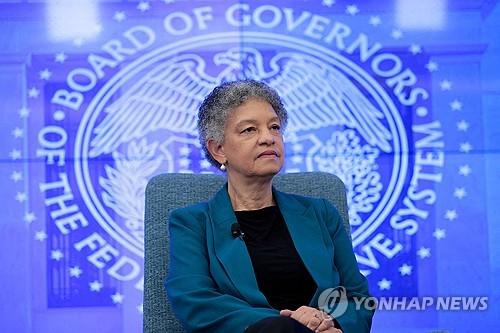
Collins: "Likelihood of sustained inflation has increased"... Barkin: "Price pressures not temporary factors"
Williams: "Interest rate control tools working well... Fine-tuning possible to adapt to changes"
Senior officials of the U.S. Federal Reserve (Fed) have successively issued statements emphasizing price stability and the structural stability of the financial system since the Fed's benchmark interest rate hike last week.
Susan Collins, President of the Federal Reserve Bank of Boston, stated in a LinkedIn post on the 22nd (local time), "Considering all currently available information, I believe the likelihood of a scenario where inflation rates persist significantly above 2% has increased."
President Collins explained, "While inflationary pressures have increased, labor market conditions generally appear robust, and the unemployment rate also remains low."
She continued, "As the labor market is on a more stable footing, monetary policy can now focus on a timely return to price stability."
President Collins emphasized, "This is especially true given that inflation has been excessively high for the past five and a half years," adding, "A somewhat more restrictive federal funds rate would help ensure inflation sustainably returns to its target level."
Tom Barkin, President of the Federal Reserve Bank of Richmond, also assessed in a speech at an event in Baltimore on the same day that the recent U.S. economy is becoming more robust based on sustained consumption and solid growth, but warned that the recent rise in prices is not simply due to temporary supply chain factors such as energy or tariffs.
</>
President Barkin said, "The risks associated with inflation are still greater than the risks associated with maximum employment," and "That is why we raised the benchmark interest rate at last week's meeting."</>
However, he took a cautious stance regarding the necessity or number of additional rate hikes, stating, "We will have to wait and see."
Statements regarding the Fed's policy implementation framework and market infrastructure maintenance work also followed.
</>
According to Reuters, John Williams, President of the Federal Reserve Bank of New York, assessed that interest rate control tools are working well, but also stated that fine-tuning is possible to adapt to changes in financial markets.</>
In a keynote address at a U.S. Treasury market conference in New York on the same day, President Williams said that using current short-term interest rate management tools to supply 'ample' reserves to the financial system has "proven very effective" in supporting the smooth functioning of core financial markets and controlling interest rates.</>
He added, "As markets evolve over time, we must ensure that our policy tools are suitable for performing their intended functions," leaving open the possibility of flexible adjustments based on market conditions.</>
Philip Jefferson, Vice Chair of the Fed, said at the same event that the Fed's recent improvements to the emergency lending window (discount window) have made it easier for financial institutions to use, which supports market liquidity, financial stability, and monetary policy implementation.</>
Newsletter
Get key news delivered to your email every morning
to leave a comment.