
to leave a comment.
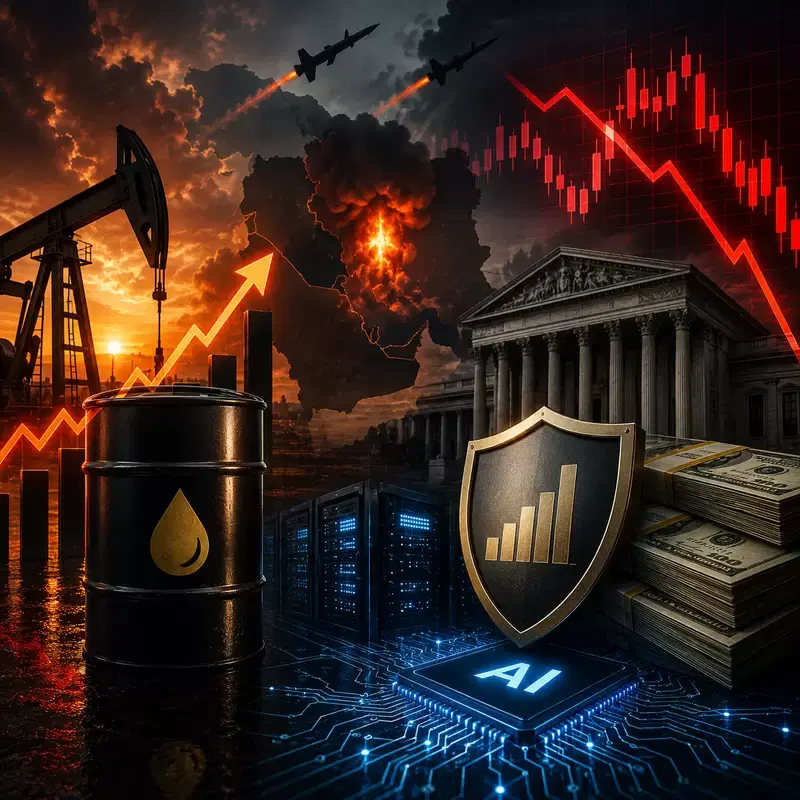
▲ Rising oil prices, US stock market / AI-generated image
Jim Cramer, host of CNBC's economic show Mad Money, warned that "the stock market rally could continue to falter due to the surge in oil prices from Iran." He also stated that based on this, he increased his cash holdings to over 15% and reduced his exposure to AI and data center investments.
On the September 2nd broadcast (local time), Cramer diagnosed that escalating tensions with Iran simultaneously pushed up oil prices and interest rates, pressuring the stock market. The Dow Jones Industrial Average fell by 419 points, the S&P 500 by 0.1%, and the Nasdaq Composite by 1.3%. Following US President Donald Trump's military response and strong messages against Iran, international oil prices surged by over 5%. Cramer analyzed that the rise in oil prices led to a sharp increase in interest rates, which then triggered stock sell-offs.
Cramer warned that such shocks could recur for days to months. He pointed to a vicious cycle where a US attack on Iran and tensions in the Strait of Hormuz would push up oil prices, leading to rising interest rates and stock market sell-offs. Kevin Warsh, former Federal Reserve (Fed) Governor, also suggested that the Fed might not hesitate to raise short-term interest rates to curb inflation. Cramer likened Warsh to former Fed Chairman Paul Volcker, who raised interest rates to 20% in the early 1980s, saying, "Warsh would not hesitate to do the same if necessary."
Rising oil prices are a burden that extends beyond corporate profits to household costs. Cramer stated, "High oil prices are like a tax imposed on the entire system." He explained that expensive diesel prices increase transportation costs, and supermarkets pass these costs on to consumers. He pointed out that commuting costs, travel expenses, airfare, and construction costs could all rise in a chain reaction. The depletion of the Strategic Petroleum Reserve due to months of conflict was also presented as a factor increasing the burden of oil prices.
Cramer also defensively adjusted his actual portfolio. He increased the cash allocation of his investment club's charitable trust to over 15%, stating it's a very high level throughout its 25-year operating history. He decided to reduce data center investments and expand healthcare holdings. He also sold one of his preferred AI infrastructure stocks. While he continues to hold Nvidia (NVDA) and Apple (AAPL), he assessed that there is strong selling pressure across semiconductor and AI stocks in general.
Cramer explained that the president's strong messages alone could move oil prices by about 1% and push down the stock market by about 0.25%. If military action followed, he estimated that oil prices could jump by about 2% and major indices could fall by about 0.5%. On this day, oil prices surged by over 5%, and global interest rates also rose. He pointed out that historically, September is the weakest month for the stock market, stating that "dip-buying investors are not being rewarded as they used to be." He particularly emphasized the need for AI investors to maintain low expectations.
[Article Summary]
-Jim Cramer analyzed that rising tensions with Iran led to a more than 5% surge in oil prices, triggering a chain reaction of rising interest rates and stock market sell-offs.
-Cramer adopted a defensive strategy, increasing the cash allocation of his charitable trust to over 15% and reducing exposure to data center and AI investments.
-Cramer warned that during ongoing Iranian tensions and interest rate volatility, an AI-focused "buy the dip" strategy might not yield results as it used to.
*Disclaimer: This article is for investment reference only, and we are not responsible for any investment losses based on it. The content should be interpreted for informational purposes only.*
Newsletter
Get key news delivered to your email every morning
to leave a comment.