
to leave a comment.
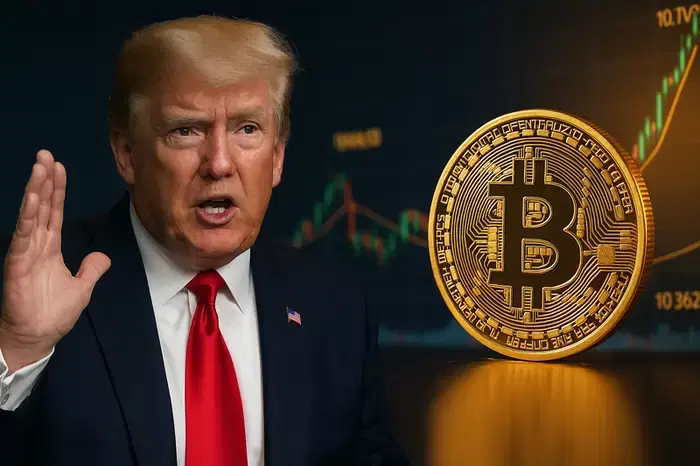
▲ Trump, Bitcoin ©
As the U.S. White House once again accelerates the expansion of its strategic Bitcoin reserve, predictions suggest that if new government purchases materialize, they could act as a powerful catalyst to drive up prices.
According to investment media outlet The Motley Fool on August 9 (local time), Bitcoin (BTC) fell 50% from its peak despite the launch of a strategic Bitcoin reserve last year, failing to meet market expectations. However, with the White House pushing to strengthen the reserve system again this summer, investor interest is being rekindled.
Key to this is the American Reserve Asset Modernization Act (ARMA), recently co-sponsored by Republican Representative Nick Begich and Democratic Representative Jared Golden. ARMA, a bipartisan bill, proposes preventing the reserve from disposing of its Bitcoin for 20 years and establishes a framework for the U.S. government to acquire holdings in a fiscally neutral manner. It also includes legal, audit, and compliance mechanisms necessary for large-scale national holdings.
However, ARMA's purchase plan is less aggressive than the Bitcoin Act proposed by Senator Cynthia Lummis. The Bitcoin Act is designed for the U.S. government to purchase 200,000 units annually for five years, ultimately securing more than 5% of the circulating supply. Patrick Witt, the White House Director of Digital Assets, stated that significant progress has been made in establishing a foundation to protect government-held cryptocurrencies and that work related to ARMA could accelerate once the Clarity Act, a U.S. cryptocurrency market structure bill, is enacted.
The U.S. government is currently estimated to hold 328,372 Bitcoins, worth approximately $21 billion. This accounts for about 1.5% of the total circulating supply. If the government goes beyond consolidating previously seized assets into a single reserve and also secures new purchasing authority, analysis suggests that sustained government demand and the 20-year mandatory holding provision could reduce market supply and stimulate price increases.
The possibility that the expansion of U.S. reserves could stimulate participation from other countries has also been raised. If nations engage in a competition to acquire Bitcoin, new demand could flow in, further increasing price pressure. Whether the strategic Bitcoin reserve will actually transform into a purchasing mechanism depends on the legislative progress of the Clarity Act and ARMA.
*Disclaimer: This article is for investment reference only, and we are not responsible for any investment losses based on it. The content should be interpreted for informational purposes only.*
Newsletter
Get key news delivered to your email every morning
to leave a comment.