
to leave a comment.
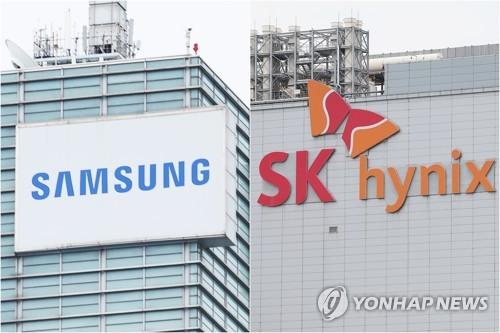
Market research firms Yole Group and TrendForce provide outlook at memory event 'FMS 2026'
An outlook has emerged that Korea will maintain its status as the 'memory powerhouse' until 2031.
Josephine Lau, an analyst at French market research firm Yole Group, presented this outlook at the memory event 'FMS 2026' held at the Santa Clara Convention Center in California, USA, on the 4th (local time).
She cited the Korean government's plan to double wafer production within five years and Samsung Electronics and SK Hynix's active investment as the basis for this prediction.
Meanwhile, the memory consumption landscape is reportedly undergoing significant changes due to US semiconductor regulations against China.
The US share of memory consumption surged by 15 percentage points (p) from 37% in 2021 to 52% last year, while China's share, directly hit by the regulations, fell by 6%p from 35% to 29% during the same period.
The combined memory consumption share of the US and China increased by 9%p from 72% to 81%.
Lau analyzed that the memory semiconductor market has now moved beyond the learning-centric 'AI 1.0' phase and entered the inference-centric 'AI 2.0' phase.
In the AI 2.0 phase, product development cycles have dramatically shortened, putting pressure on memory producers to shorten the traditional 18-month new product development period and release new products in just 12 months, she explained.
For this reason, the agility of companies that can respond quickly to market conditions has emerged as a key competitive advantage, according to the analysis.
An outlook was also raised that NVIDIA's influence, which has virtually monopolized the High Bandwidth Memory (HBM) market used in AI chips, will relatively decrease.
Avril Wu, Senior Research Vice President at Taiwanese market research firm TrendForce, predicted, "NVIDIA's HBM market share will fall from 66% last year to around 58% this year."
This is because large cloud service companies, including Google with its own Tensor Processing Unit (TPU) chip, are aggressively increasing the adoption of Application-Specific Integrated Circuits (ASICs) instead of NVIDIA chips.
The technological catch-up of Chinese memory manufacturers was also mentioned. Yole Group explained that an analysis of ChangXin Memory (CXMT)'s DRAM products showed they have reached the 1z process (10nm-class 3rd generation) completed by industry leaders in 2019.
Newsletter
Get key news delivered to your email every morning
to leave a comment.