
to leave a comment.
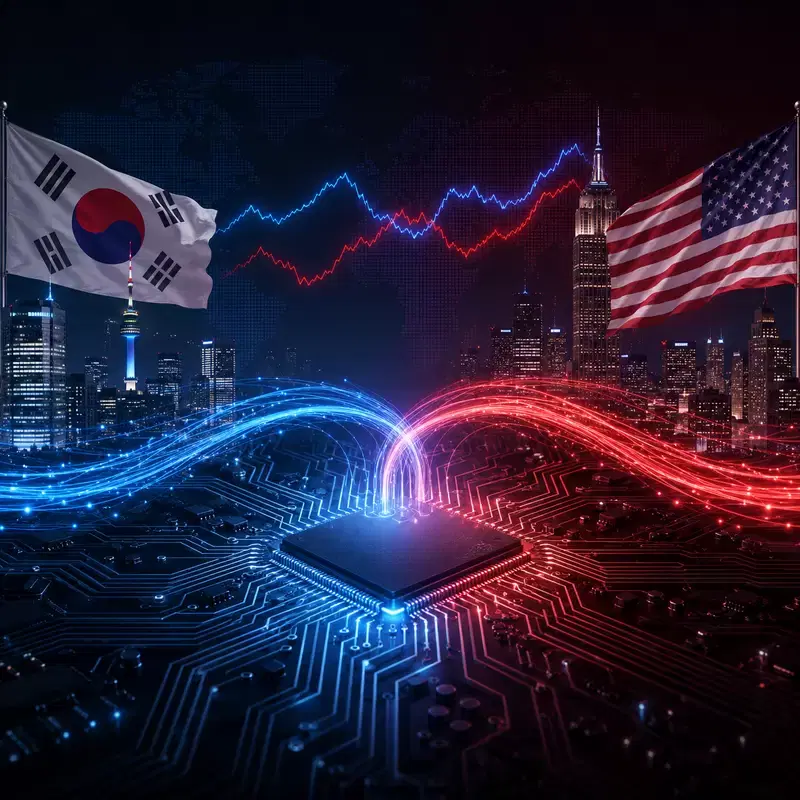
▲ Domestic stock market, KOSPI, US stock market, Nasdaq/AI generated image
The synchronization between KOSPI and Nasdaq 100 has soared to its highest level in five years. The risk of a slowdown in AI semiconductor investment simultaneously shaking both the Korean and US stock markets has also increased.
According to crypto-specialized media BeInCrypto on July 29 (local time), the 60-day correlation coefficient between KOSPI and Nasdaq 100 rose to approximately 0.50. This is the highest level since 2021. The link between the two indices is the AI facility investment by large US cloud providers.
Samsung Electronics and SK Hynix account for more than half of KOSPI's market capitalization. This structure means that as AI investment by US tech companies increases, demand for Korean memory semiconductors also rises. Last year, data centers accounted for about 40% of global DRAM demand, but now that figure has exceeded half.
As concerns surrounding AI facility investment grew, semiconductor stocks in both countries simultaneously wavered. SK Hynix recently fell 13% amid selling pressure. On July 13, SK Hynix plunged 15%, causing KOSPI to drop over 8%, and the Nasdaq 100 also fell 1.88%. On the same day, Micron fell 4%, SanDisk 12%, and Intel 6%.
Wool, Head of Research at Rayliant Global Advisors, stated, “The common factor driving the performance of US and Korean technology stocks is market sentiment towards AI hardware investment.” Korean memory semiconductor stocks are more volatile than their US counterparts, and the flow of funds into leveraged Exchange Traded Funds (ETFs) has also been identified as a factor amplifying price fluctuations.
Samsung Electronics announces its earnings outlook approximately two weeks earlier than major US semiconductor companies. This schedule is considered the next variable to confirm the synchronization trend between KOSPI and Nasdaq 100. As the connection between the two indices strengthens, the diversification effect for global investors is also weakening.
[Article Key Summary]
-The 60-day correlation coefficient between KOSPI and Nasdaq 100 rose to approximately 0.50, marking the highest level since 2021.
-With Samsung Electronics and SK Hynix accounting for more than half of KOSPI, US AI facility investment is dictating the direction of the Korean stock market.
-If concerns about a slowdown in AI investment spread, both Korean and US semiconductor stocks could fall simultaneously, weakening the diversification effect.
*Disclaimer: This article is for investment reference only, and we are not responsible for any investment losses based on it. The content should be interpreted for informational purposes only.*
Newsletter
Get key news delivered to your email every morning
to leave a comment.