
to leave a comment.
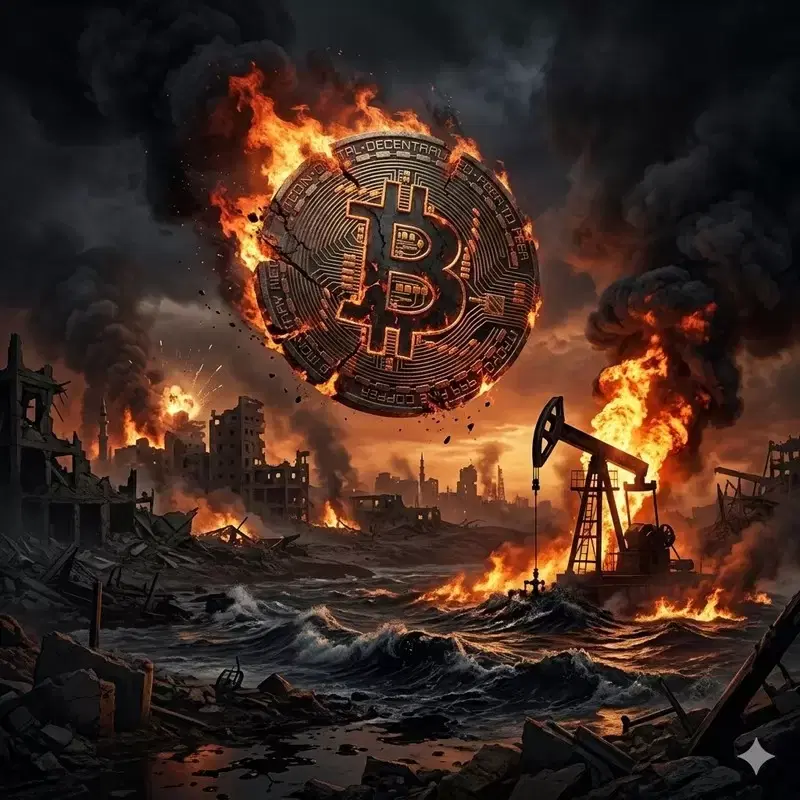
▲ Bitcoin (BTC), Iran War, Crude Oil / AI Generated Image
An analysis suggests that an energy supply shock due to escalating tensions in the Strait of Hormuz could lead to a short-term price decline in the Bitcoin (BTC) market.
According to the cryptocurrency specialized media Bitcoinist on March 15 (local time), Iran's blockade of the Strait of Hormuz, which accounts for 20% of the world's oil supply, is increasing uncertainty in the global economy, including the virtual asset market. Bitcoin's price successfully rebounded after falling to $60,000 in early February, but geopolitical risks remain a variable. Market research firm XWIN Research Japan predicts that if the strait blockade is prolonged, inflationary pressures will intensify, negatively impacting Bitcoin, a risk asset.
The closure of the Strait of Hormuz would cause a global energy supply shock. Rising oil and gas prices lead to an increase in the consumer price index, prompting central banks worldwide to tighten monetary policy, such as raising interest rates, to curb inflation. In such an environment, investors tend to move funds towards safe-haven assets like the dollar or fiat currencies that can benefit from high interest rates, rather than volatile virtual assets.
Investors appear to consider Bitcoin a risk asset rather than a safe haven during geopolitical crises. XWIN Research Japan analyzed that if tensions in the Strait of Hormuz persist, a large-scale outflow of funds could occur in the Bitcoin market. Initially, selling pressure will intensify due to fear stemming from energy price shocks, but over time, the market is expected to stabilize and form new price support levels.
Bitcoin's future price direction will be more influenced by the financial ecosystem's response than by simple energy supply issues. Key variables include global liquidity levels, each country's policy responses, and the size of open interest in the market. Investors should closely monitor derivative indicators such as open interest and funding rates to assess market overheating. If open interest surges while funding rates show extreme values, the risk of sharp price fluctuations due to external shocks increases.
Currently, Bitcoin is trading around $71,639, showing relative resilience despite the geopolitical crisis. If tensions in the Middle East do not subside, concerns about economic contraction due to rising energy costs could continue to pressure the market. Participants in the virtual asset market must focus on risk management by simultaneously checking real-time on-chain data and changes in macroeconomic indicators.
*Disclaimer: This article is for investment reference only, and we are not responsible for investment losses based on it. The content should be interpreted for informational purposes only.*
to leave a comment.