
to leave a comment.
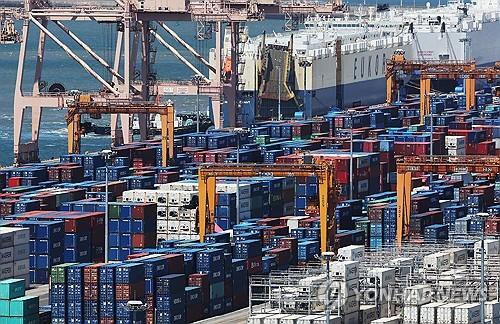
Injunction granted to allow tariff collection during appeal process
Trump administration appealed the day after the first-instance ruling on the 7th declared it invalid.
A higher court has temporarily halted the first-instance ruling that deemed illegal the 10% global tariff imposed by the Donald Trump administration immediately after the U.S. Supreme Court's ruling invalidating reciprocal tariffs.
According to Reuters, the U.S. Court of Appeals for the Federal Circuit on the 12th (local time) temporarily stayed the enforcement of the U.S. Court of International Trade (CIT) ruling that the 10% global tariff imposed by the Trump administration in February under Section 122 of the Trade Act was illegal.
The Federal Circuit Court of Appeals ordered the parties to the lawsuit to swiftly submit their opinions regarding the Trump administration's request to continue collecting tariffs during the appeal process.
Bloomberg reported that the court's decision means the payment of the 10% global tariff will continue. Small and medium-sized businesses that filed the lawsuit must submit their opinions within a week.
The CIT ruling, which found the imposition of the 10% global tariff under Section 122 of the Trade Act to be illegal, was issued on the 7th.
The CIT ruled that Section 122 of the Trade Act is intended to address balance of payments deficits, but the Trump administration invoked Section 122 while confusing balance of payments with trade deficits.
However, the CIT stated that the first-instance ruling was effective only for two U.S. small businesses and the state of Washington.
The Trump administration appealed the next day, on the 8th. The Trump administration argued that if the first-instance ruling took immediate effect, thousands of other importers who had been paying tariffs would line up to file lawsuits.
After the U.S. Supreme Court ruled in February that reciprocal tariffs based on the International Emergency Economic Powers Act (IEEPA) were illegal, the Trump administration initially imposed a 10% global tariff based on Section 122 of the Trade Act as a way to introduce 'alternative tariffs'.
Since this tariff can only be maintained for 150 days until late July, the Trump administration ultimately plans to fill the void left by reciprocal tariffs by introducing new tariffs after an investigation under Section 301 of the Trade Act. Currently, the Trump administration is conducting investigations under Section 301 of the Trade Act in two areas: overproduction and forced labor.
Newsletter
Get key news delivered to your email every morning
to leave a comment.