
to leave a comment.
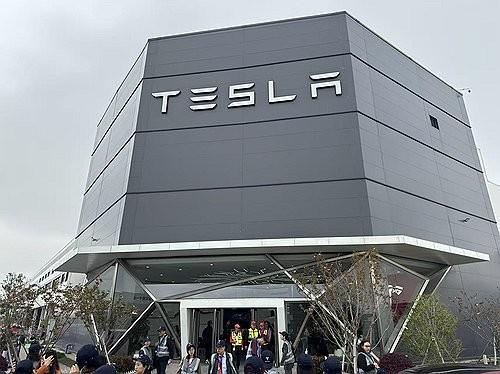
Driven by price cuts, high oil prices, and preference for SDVs... Issues include illegal use of FSD
Last month, American Tesla for the first time surpassed South Korea's Kia in the domestic passenger electric vehicle sector, becoming the top-selling brand.
The reason is attributed to a large number of young people, who prioritize vehicle software (SW) elements such as autonomous driving and infotainment, choosing Tesla amid high oil prices due to the Middle East war.
According to the Korea Automobile Importers & Distributors Association (KAIDA) and others on the 10th, Tesla sold a total of 13,190 units in the domestic market in April this year.
This is the highest monthly sales volume ever recorded by an imported car brand, and Tesla achieved this performance solely with electric vehicles such as Model Y and Model 3.
Tesla's sales volume also surpassed that of Kia's electric vehicles (11,673 units, excluding PV5), which was previously the top seller, making Tesla the number one brand in the domestic passenger EV market for the first time.
The general consensus in the automotive industry is that Tesla's popularity is driven by young consumers in their 20s and 30s.
It is evaluated that significant price reductions, increased demand for electric vehicles due to high oil prices, and the younger generation's preference for software-defined vehicles (SDVs) have driven Tesla's popularity.
In short, it is evaluated that the consumer perception of 'EV·SDV = Tesla' has become established in Korea.
Reflecting this, according to statistics from Carisyou Data Research Institute, the number of new car registrations by those in their 20s last month recorded the highest increase rate of 36.3% across all age groups.
Considering that vehicle demand from those in their 20s had been sluggish, with their share of new car registrations falling to its lowest level in 10 years last year, it is interpreted that Tesla is leading an unexpected change.
However, as over 90% of Tesla vehicles sold in Korea are Model Y and Model 3 manufactured in China, there is advice that not only the government but also domestic finished vehicle manufacturers should strengthen their vigilance.
In particular, while Tesla's FSD (Full Self-Driving) feature, preferred by young people, cannot be used in Chinese-made vehicles, attempts by some domestic consumers to illegally activate this feature have been detected. In Korea, Tesla's FSD feature can only be used in Model S, Model X, and Cybertrucks produced in the United States.
According to the office of Representative Park Yong-gap of the Democratic Party of Korea, who is a member of the National Assembly's Land, Infrastructure and Transport Committee, the total number of attempts to illegally activate the FSD feature in Korea was 85 cases (as of the 28th of last month).
Furthermore, concerns are raised that LFP batteries, which are exclusively installed in Chinese-made Tesla vehicles, are inexpensive but almost impossible to recycle, potentially causing environmental problems in Korea.
Professor Kim Pil-soo of Daelim University's Department of Future Automotive Engineering said, "In a situation where young people view Tesla as a 'moving computer' and consider it a dream car, the price of the rear-wheel-drive Model Y imported from the Shanghai factory was significantly lowered, leading to increased Tesla sales." He added, "However, to solve the problem of difficult-to-recycle LFP batteries, a producer responsibility recycling system should be introduced."
Newsletter
Get key news delivered to your email every morning
to leave a comment.