
to leave a comment.
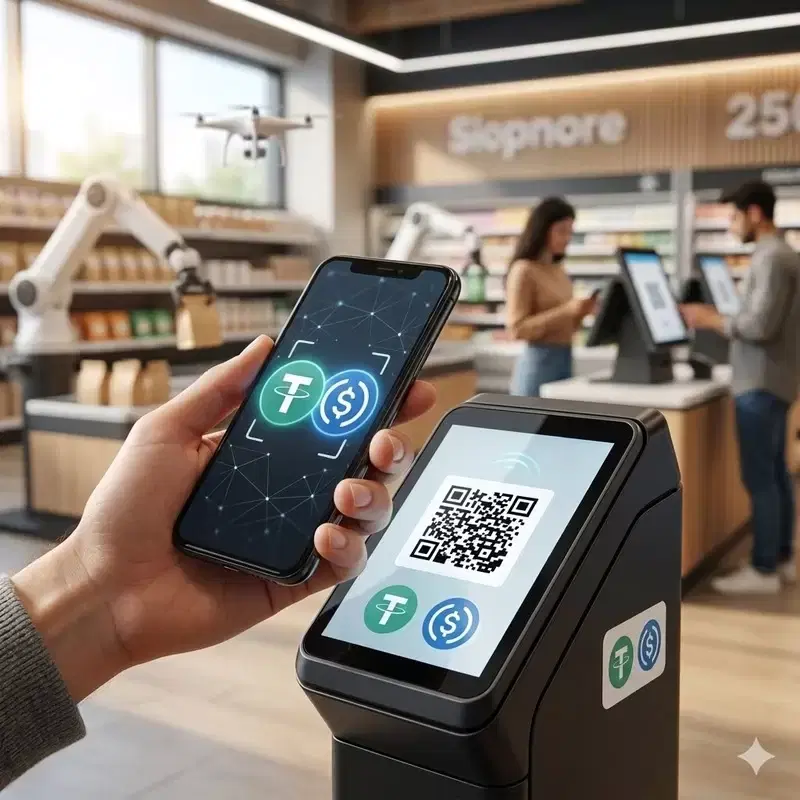
▲ Stablecoin, cryptocurrency payment/AI generated image
Cryptocurrency cards are rapidly penetrating as a means of payment for daily consumption, such as groceries, dining out, and fuel, rather than for luxury cars and luxury goods. As European users increasingly use OKX cards at supermarkets, restaurants, and gas stations, analysis suggests that cryptocurrency payments are moving beyond speculative assets to become a part of daily financial infrastructure.
According to CCN on May 7 (local time), a report on card usage in the European Economic Area released by OKX in May 2026 showed that European consumers primarily used cryptocurrencies for daily consumption. OKX analyzed card payment data within the European Economic Area from January 28 to February 26, stating that 26% of all transactions occurred at grocery stores and supermarkets. Restaurant payments accounted for 12%, and online marketplace payments for 13%. Including fast food and convenience stores, food-related spending reached 44%.
Consumption patterns also varied significantly by country. In France, bakery payments accounted for 5% of total transactions, more than double the European average of 2%. In Germany, online marketplace payments reached 30%, double the European average, followed by grocery and dining out payments. In the Netherlands, supermarket payments were the largest at 37%, with travel booking and accommodation payments also close to 20%. In Poland, convenience store payments accounted for 16%, and fuel payments approximately 10%.
CCN reported that the increase in cryptocurrency card spending is not limited to Europe. Global monthly cryptocurrency card payment volume grew from approximately $100 million in early 2023 to over $1.5 billion by the end of 2025, reaching an annualized scale of $18 billion. This represents about a 15-fold growth in less than three years. Stablecoins like USDT and USDC are considered a key foundation for the spread of cryptocurrency cards, enabling near-instant conversion of cryptocurrencies to fiat currency at payment terminals.
Visa and Mastercard are also accelerating the expansion of their cryptocurrency payment infrastructure. Visa supports over 130 stablecoin-linked card programs in more than 40 countries and has introduced USDC payments on multiple blockchains, including Solana and Ethereum.
Through the Visa network, users can use cryptocurrencies at over 100 million merchant locations worldwide, and stablecoin-linked spending in Q4 2025 reached an annualized $3.5 billion.
Mastercard also supports real-time conversion-based payments through its cryptocurrency card program, and in March 2026, it launched a Crypto Partner Program involving over 85 companies, including Binance and Ripple.
The core change in cryptocurrency payments lies in the method of use rather than the scale of use. Users are no longer using cryptocurrency cards only for one-off consumption or to realize investment gains, but are now using them in areas traditionally covered by existing bank cards, such as groceries, travel, fuel, coffee, and online shopping. As payment infrastructure improves and stablecoin usage expands, the boundary between cryptocurrency balances and traditional currencies is narrowing at the point of consumption.
*Disclaimer: This article is for investment reference only, and we are not responsible for any investment losses based on it. The content should be interpreted for informational purposes only.*
Newsletter
Get key news delivered to your email every morning
to leave a comment.