
to leave a comment.
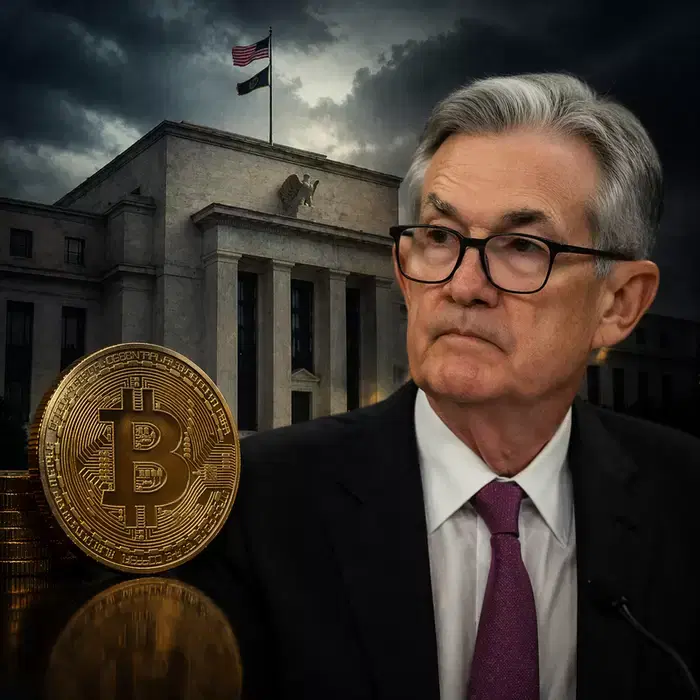
▲ Jerome Powell, Bitcoin (BTC)/AI generated image ©
Market attention is focused on whether the curse of price drops that inevitably follows the US Federal Open Market Committee (FOMC) meeting will repeat itself this time. A strong warning is sounding that Bitcoin (BTC), which has experienced an average 11% sharp drop within a week in 8 out of the last 9 meetings, could once again retreat to the $70,000 level.
According to Bitcoinist, a cryptocurrency specialized media outlet, on May 2 (local time), renowned virtual asset analyst Ardi discovered an undeniable downward pattern in the price movements following the Federal Reserve's interest rate decisions.
The Federal Reserve froze its benchmark interest rate at 3.50% to 3.75% through a meeting held from April 28 to 29. This precisely matched the outcome that the CME FedWatch had predicted with a 99% probability even before the meeting.
An interesting fact emerges from the daily chart from May 2025 to late April 2026, which analyst Ardi revealed via social media. Immediately after the last 9 meetings, Bitcoin's price showed significant selling pressure in as many as 8 instances.
The only exception was May 2025. At that time, Bitcoin had already plummeted by approximately 24% from its all-time high even before the meeting began, with the decline already priced in.
What's more noteworthy is that the Federal Reserve's policy direction had minimal influence on price declines. Regardless of whether interest rates were cut, frozen, or hawkish remarks were made, prices invariably dropped immediately after the meetings.
This pattern exerts heavy downward pressure on current prices. If an 11% decline is applied to Bitcoin, which started from a low of around $65,000 in early April and rebounded by 21% to trade between $76,000 and $79,000, calculations suggest it could fall to $70,000 within the next week.
In this meeting, the Federal Reserve assessed that economic activity was expanding at a robust pace, yet it did not ease its vigilance against high inflation coupled with rising global energy prices.
Bitcoin is an asset that reacts extremely sensitively to market liquidity expectations. If a clear path to interest rate cuts were presented, risk asset preference would revive, and the dollar would weaken, acting as a positive catalyst for the overall market. However, the Federal Reserve's cautious stance yields the opposite result.
Bitcoin successfully rebounded from its recent lows, riding a positive trend in April, but it now stands on the test bench of a historical downward pattern that follows immediately after Fed meetings. It is a time for a conservative market approach, keeping open the possibility of a return to the $70,000 level within a few days.
*Disclaimer: This article is for investment reference only, and we are not responsible for any investment losses based on it. The content should be interpreted for informational purposes only.*
Newsletter
Get key news delivered to your email every morning
to leave a comment.