
to leave a comment.
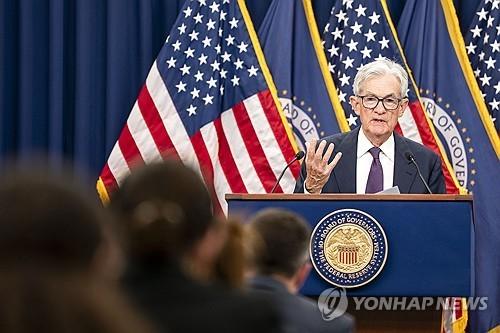
After 3 consecutive cuts last year, 3 consecutive freezes this year... "High inflation and uncertain economic outlook"
"Ready to adjust policy if employment and price targets are at risk"... Hinting at future rate cuts
4 dissenting opinions for the first time in 34 years... 1 advocated 'rate cut', 3 opposed 'accommodative stance'
The U.S. central bank, the Federal Reserve (Fed), froze its benchmark interest rate at 3.50-3.75% on the 29th (local time).
The Fed decided to maintain the benchmark interest rate as such after holding the second day of its regular Federal Open Market Committee (FOMC) meeting today.
It is analyzed that the growing concerns about inflation due to the surge in international oil prices following the Iran war influenced this decision.
The Fed cut interest rates three consecutive times in September, October, and December last year, but this year it has decided to freeze them three consecutive times, following January and March.
With this decision, the interest rate gap between Korea (2.50%) and the U.S. remains at 1.25%p based on the upper bound.
Regarding the background of the rate freeze, the Fed stated, "Inflation remains elevated, partly reflecting recent increases in global energy prices," adding, "Changes in the situation in the Middle East are creating high uncertainty for the economic outlook."
It also stated, "Recent indicators suggest that economic activity has been expanding at a solid pace," and "Job gains have remained low on average, and the unemployment rate has been little changed over the past few months."
The Fed stated, "The Committee seeks to achieve maximum employment and inflation at the rate of 2 percent over the longer run," and that it will carefully review economic indicators, changes in economic forecasts, and risk factors in future decisions regarding the benchmark interest rate.
It further stated, "The Committee stands ready to adjust the stance of monetary policy appropriately if risks emerge that could impede the attainment of the Committee’s goals." This was interpreted as hinting at the possibility of future interest rate cuts.
In today's Fed monetary policy decision statement, 8 members voted in favor, and 4 members expressed dissenting opinions (minority opinions different from the decided content). It has been 34 years since October 6, 1992, that as many as 4 official dissenting opinions have been expressed in a Fed monetary policy decision.
Fed Governor Stephen Myron, known as 'Trump's economic strategist', alone opposed the rate freeze, advocating for a 0.25%p rate cut.
Three other members, Beth Hammack, Neel Kashkari, and Lorie Logan, voted in favor of the rate freeze but opposed including an 'accommodative stance' in the statement that would signal that a rate cut is more likely than a rate hike in the future.
The New York Times (NYT) reported that these three members wanted the Fed to more clearly indicate in its statement that future actions might not necessarily be rate cuts.
The fact that inflation remains high with a risk of further increases is a factor limiting rate cuts, and concerns about a slowing job market make rate hikes difficult, suggesting that the Fed's dilemma over future rate decisions will deepen.
In particular, uncertainty is expected to increase further when Chairman Powell steps down next month and a new Fed leadership system begins.
The next FOMC meeting will be held on June 16-17.
When current Chairman Powell completes his term and steps down on May 15, Kevin Warsh, the nominee for the next chairman, will preside over that meeting. The Senate Banking Committee's approval of Warsh's nomination was passed today, and final approval will be confirmed after a full Senate vote.
As U.S. President Donald Trump continuously pressures for interest rate cuts, attention is focused on what interest rate decisions the Fed will make under the Warsh system.
Warsh, during his Senate confirmation hearing, previously stated, "Presidents tend to prefer lower interest rates," but also emphasized, "The independence of the Fed rests with the Fed," expressing his stance to decide monetary policy independently.
President Trump met with reporters at the White House today and, when asked if he thought Warsh, once sworn in, could persuade other Fed governors to cut rates, said, "We'll have to see, but they should," adding, "Because now is the right time to cut rates."
Chairman Powell held his final press conference as chairman today and, regarding the U.S. Department of Justice's investigation into allegations of excessive spending on Fed building renovations targeting him, said, "I am waiting for the investigation to be concluded thoroughly and transparently," adding, "I am awaiting the results and will step down when deemed appropriate."
Chairman Powell plans to serve the remainder of his term as governor until January 2028, even after his term as chairman ends, and will exercise his voting rights on interest rate decisions. With his decision to remain, President Trump has postponed the opportunity to appoint his own nominees to the Fed Board.
Newsletter
Get key news delivered to your email every morning
to leave a comment.