
to leave a comment.
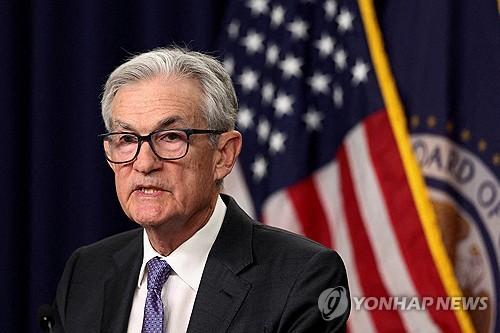
Fear of Trump-initiated retaliation... plans to remain a board member for the time being even after his term as chairman ends next month
Despite his conservative background as an investment banker and financial official, he left an 'anti-Trump' image
The 'unprecedented' final year of clashes with Trump, a 'period of hardship' for the US central bank
When US President Donald Trump talks about people he dislikes, he arbitrarily invents middle names for them.
For example, he called Marjorie Taylor Greene, the former Republican Federal House Representative who was once an ardent supporter but then turned her back, 'Marjorie Traitor (traitor) Brown (meaning Greene has faded).'
President Trump habitually calls Jerome Powell, the Federal Reserve (Fed) Chairman, who is nearing the end of his eight-year term, 'Jerome Too Late Powell.'
This expression was first used by President Trump in a post on the social media platform Truth Social in May last year, expressing his dissatisfaction that Chairman Powell 'responds too late' despite his repeated demands for interest rate cuts.
Chairman Powell, a former Wall Street investment banker, served as Under Secretary of the Treasury in the George H.W. Bush administration before becoming a Fed Governor in 2012, nominated by then-President Barack Obama.
A conservative Republican, Chairman Powell took office in 2018, succeeding former Chair Janet Yellen. The person who appointed him was President Trump during his first term.
Then, in 2022, then-President Joe Biden reappointed him, allowing him to serve as Fed Chairman for another four years. His term expires on the 15th of next month.
In particular, the last year of his term was a period of trials and resistance for Chairman Powell personally, and for the Fed, the US central bank, it was a time when unprecedented scenes unfolded continuously, pushing the value of its independence to the brink.
As soon as Chairman Powell faced President Trump, his appointer, who returned to the White House in January last year, he was confronted with pressure to cut interest rates.
At that time, the US benchmark interest rate was 4.25-4.50%. In the process of overcoming the 'COVID-19 pandemic,' the Fed maintained virtually zero interest rates (0.00-0.25%) in 2020-2021.
The large amount of money released at that time stimulated inflation, and he pursued a hawkish policy of sharply raising interest rates to the 5% range to curb soaring prices and tighten liquidity.
President Trump judged interest rates to be too high. Believing that government debt should be reduced by lowering national bond interest rates for a massive tax cut policy, he still insists that interest rates should be lowered to the 1% range.
As the head of the central bank pursuing price stability and full employment, Chairman Powell ignored President Trump's demands. From January to July last year, he froze interest rates five times in a row.
President Trump, who had complained about the interest rate freeze, saying, "He (Powell) and I don't get along," eventually began calling Chairman Powell "this too-late person" from May last year and hurled vulgar insults, calling him "a fool who knows nothing."
President Trump's pressure on Chairman Powell was not limited to words. He openly hinted at his dismissal and took 'effective action' by raising issues with the cost of renovation work for the Fed building in Washington D.C.
President Trump's visit to the Fed building in July last year under the pretext of inspecting the construction site was unusual. Previous presidents had refrained from such actions out of respect for the Fed's independence.
President Trump stood side by side with Chairman Powell in front of cameras, both wearing hard hats. The interpretation was that the construction cost was a 'pretext,' and the actual intention was to pressure for interest rate cuts.
From September to December last year, the Fed cut interest rates three times in a row by 0.25 percentage points each. This only met market expectations, considering inflation and employment conditions, and fell short of President Trump's expectations for a significant reduction.
In early August last year, President Trump appointed his close aide, Stephen Myron, who was serving as the White House National Economic Council Chairman, as a Fed Governor to fill a vacancy left by a predecessor's resignation.
At the end of the same month, he abruptly informed Lisa Cook, a Fed Governor considered a hawk, of her dismissal, citing indications of mortgage fraud. This was unprecedented in the history of the Fed.
By appointing a White House aide as a Fed Governor and deciding to dismiss an existing Fed Governor whose stance differed from his own, even before a judicial decision was made, these two personnel decisions were seen as shaking the Fed's independence.
In the case of Governor Cook's dismissal, it faced a lawsuit amidst criticism that it lacked legitimacy. This case is awaiting a final decision from the Supreme Court, and US media observes that it is highly likely that a decision to maintain her board membership will be made.
Chairman Powell attended the public hearing of Governor Cook's case at the Supreme Court, expressing 'sympathy for a shared plight.' He explained the reason for his attendance, saying, "This case is probably the most important legal case in the Fed's 113-year history."
The relationship between President Trump and Chairman Powell, who had clashed at every turn, spiraled into a crisis when the US Department of Justice initiated an investigation into Chairman Powell this year regarding allegations of excessive spending on the Fed building renovation.
On January 11, Chairman Powell disclosed, "I received a grand jury subpoena and a threat of criminal indictment from the Department of Justice on the 9th, in connection with my congressional testimony in June last year regarding the Fed building renovation."
The initiation of an investigation into a Fed Chairman was unprecedented. Similarly, it was unprecedented for a Fed Chairman to issue a video statement directly criticizing the president who appointed him.
Chairman Powell directly criticized President Trump, saying, "The threat of criminal indictment is a result of the Fed deciding interest rates in a direction it deems most consistent with the public interest, rather than following the President's preferences."
He emphasized, "This issue is about whether the Fed can continue to decide interest rates based on evidence and economic conditions, or whether monetary policy will be swayed by political pressure or threats."
The investigation into Chairman Powell, which acted as an obstacle to the Senate confirmation process for his successor, nominee Kevin Warsh, was vaguely suspended, but this will not be erased from the Fed's 'history of suffering.'
In a press conference today explaining the results of the Federal Open Market Committee (FOMC) meeting, which concluded on the 29th (local time), Chairman Powell announced that this would be his last press conference as chairman, indicating his intention to step down from the chairmanship after his term ends next month, even if the confirmation of his successor is delayed.
However, Chairman Powell stated at the press conference that he would maintain his position as a Fed Governor for the time being even after his term as chairman ends, saying, "I have stated that I will not leave the board until this investigation (regarding the Fed building renovation costs) is transparently, definitively, and completely concluded, and I still adhere to that."
Although it is customary for a Fed Chairman to relinquish the remainder of their board term and step down after their term as chairman ends, Chairman Powell has decided to retain his board membership even after his chairmanship expires. He can serve as a Fed Governor until January 2028 at the latest.
This is interpreted as a judgment that the Trump administration's offensive regarding the cost of renovating the Fed building has not been fully concluded. Given the Trump administration's ruthless 'retaliation against political opponents' stance, it is difficult to see the embers of the investigation as completely extinguished, and under the judgment that civil liability could be pursued separately from the investigation, Chairman Powell seems to believe that remaining at the Fed for the time being is better for protecting himself.
Previously, when Chairman Powell stated that he would not leave the Fed until the prosecutorial investigation into the Fed building renovation allegations was concluded, President Trump said on the 15th, "I should fire him."
Newsletter
Get key news delivered to your email every morning
to leave a comment.