
to leave a comment.
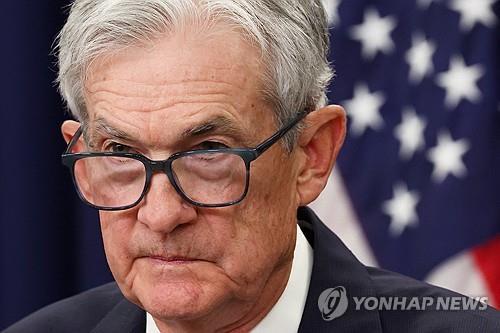
Three members oppose 'easing bias' phrase... blocking rate cut expectations
Differences emerge ahead of Kevin Warsh's inauguration... Wall Street forecasts "freeze until year-end"
The US central bank, the Federal Reserve (Fed), held a Federal Open Market Committee (FOMC) meeting on the 29th (local time) and froze the benchmark interest rate, but this decision is interpreted as a 'hawkish (preferring monetary tightening) freeze' given that three members issued a 'minority opinion' blocking expectations of future rate cuts.
As Kevin Warsh, the nominee for the next Fed chair, is expected to lead the Fed from next month, the change in the Fed's leadership and the divergence of views among committee members are expected to become factors that increase the Fed's policy uncertainty, coupled with economic uncertainty due to the US-Iran war.
Prior to the FOMC decision on this day, market experts had no disagreement that the Fed would freeze the benchmark interest rate at the current 3.50-3.75%, reflecting the surge in oil prices and increased economic uncertainty due to the Iran war.
Michael Feroli, Chief US Economist at JP Morgan Chase, predicted in a policy outlook report released ahead of the April FOMC that the Fed would freeze interest rates for the remainder of this year. He further expected the next policy move to be a hike rather than a cut, stating that rates would be raised by 0.25 percentage points in the third quarter of next year.
He explained that the two factors are acting in opposing directions: the fact that inflation remains high and is at risk of rising further in the future acts as a factor preventing rate cuts, while concerns about instability in the employment market act as a factor making rate hikes hesitant.
The uncertainty about how the surge in oil prices due to the US-Iran war will affect the US economy is also cited as a factor that makes policy changes hesitant.
Nancy Vanden Houten, Lead Economist at Oxford Economics, predicted a rate freeze in an investor note on the April FOMC outlook, stating, "It is difficult to predict inflation due to uncertainty about how long this war will last, and how long it will take for oil production to return to normal levels and prices to fall after the war ends."
The US Consumer Price Index (CPI) for March, reflecting the post-war situation, surged 0.9% month-over-month due to rising gasoline prices, recording the largest monthly increase since 2022, but the core CPI, excluding energy and food prices, rose only 0.2% month-over-month, showing a relatively moderate increase.
Christopher Waller, a Fed Governor regarded as a dove (preferring monetary easing) among FOMC members, recently stated at a public event that "if the Strait of Hormuz opens and trade flows return to some degree of normalcy, the impact of recently elevated energy prices on inflation could be negligible."
The FOMC, after freezing rates today, stated in its policy statement that "inflation has risen, partly reflecting recent increases in global energy prices," but also assessed that "the situation in the Middle East poses significant uncertainty to the economic outlook."
Market attention is focused on what changes will occur in the Fed's monetary policy if Fed Chair nominee Warsh takes office.
Ahead of today's FOMC results announcement, the US Senate Banking Committee approved Warsh's nomination.
With the uncertainty surrounding the committee vote, which had blocked the confirmation, removed, Warsh is expected to smoothly take office after a full Senate confirmation vote, following the end of current Fed Chair Jerome Powell's term on May 15th.
Chair Powell said at today's press conference, "Today's press conference will be my last as Chair," and "I congratulate the Senate Banking Committee on approving Warsh's nomination."
However, he stated that he would retain his position as a Fed Governor even after his term as Fed Chair ends on May 15th. Powell's term as a Fed Governor, separate from his term as Chair, extends until January 2028.
Wall Street experts note that Warsh did not indicate during the hearing process that he would comply with US President Donald Trump's demands for rate cuts, but they also believe that the change in leadership has increased uncertainty regarding future Fed policy.
Warsh stated at his confirmation hearing on the 21st that "presidents tend to prefer rate cuts," but also "the independence of the Fed rests with the Fed," expressing his stance to decide monetary policy based on the Fed's independent judgment.
The indication that Chair Powell, who has resisted President Trump's demands for rate cuts, will remain a Governor, along with the three Fed members' negative views on rate cuts today, is expected to widen internal disagreements and make future policy change predictions difficult.
Three members, Beth Hammack, Neel Kashkari, and Lorie Logan, agreed to freeze rates in today's decision but opposed the inclusion of the phrase 'easing bias' in the policy statement at this time.
Newsletter
Get key news delivered to your email every morning
to leave a comment.