
to leave a comment.
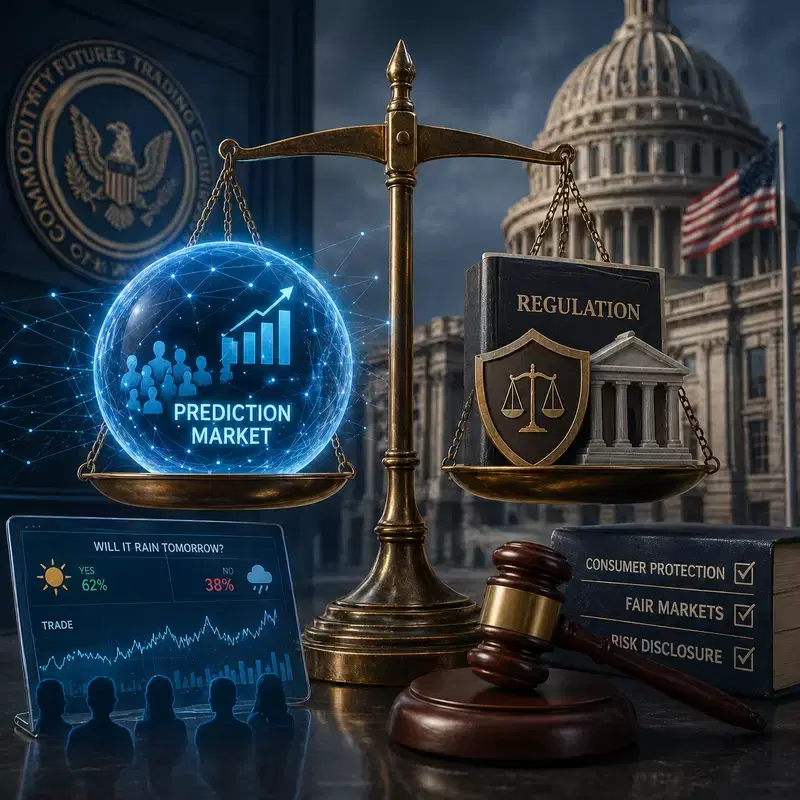
▲ Prediction Market, US Commodity Futures Trading Commission (CFTC)/AI Generated Image
The U.S. Commodity Futures Trading Commission (CFTC) has launched direct legal action, asserting exclusive federal court jurisdiction in response to Wisconsin's crackdown on prediction markets.
According to crypto media outlet Cointelegraph on April 28 (local time), the CFTC filed a lawsuit against Wisconsin to block the state's attempts to shut down federally regulated prediction market platforms such as Kalshi and Polymarket. Michael Selig, CFTC Chairman, made it clear that state governments cannot circumvent clear congressional directives. He emphasized, "The message to Wisconsin is the same as to other states like New York or Arizona. If you interfere with the operation of federal financial market regulations, we will sue."
This conflict began when Wisconsin Attorney General Josh Kaul filed civil lawsuits against Kalshi, Polymarket, Coinbase, and Robinhood on April 23. Attorney General Kaul argued that contracts related to sports outcomes offered by these platforms constitute illegal sports gambling under Wisconsin law. He demanded that these companies cease operations, asserting that thinly disguising illegal activities does not make them legal. However, the CFTC maintains an opposing view, stating that the state government is infringing upon the exclusive authority designed by the federal government.
In a 29-page complaint filed with the court, the CFTC pointed out that Wisconsin misunderstands the difference between betting and swaps. Alexandra McTague, an attorney from the Department of Justice's Civil Division, criticized Wisconsin's attempt as an infringement on the national swap market oversight system designed by the U.S. Congress. Event contracts are classified as swaps under the Commodity Exchange Act, a federal law, and do not fall into the category of gambling as defined by Wisconsin, according to the analysis. The CFTC added that individual actions by state governments lead to regulatory fragmentation, making federal enforcement difficult.
Prediction markets began gaining popularity by more accurately predicting the results of the 2024 U.S. presidential election than polls. Currently, major virtual asset-related companies such as Crypto.com have also entered this market, which has grown into a giant industry generating over $1 billion in annual revenue. In addition to Wisconsin, several other states, including New York and Arizona, have launched crackdowns under the guise of consumer protection, but recently, an Arizona court and the Third Circuit Court of Appeals ruled in favor of the CFTC, blocking state government intervention.
The outcome of this lawsuit is expected to have a decisive impact on the regulatory environment for platforms utilizing blockchain technology and decentralized market structures. The CFTC has requested clarification that state gambling laws do not apply to transactions executed in federally regulated markets. The possibility of the jurisdictional dispute between the federal and state governments extending to the Supreme Court has also been raised. Prediction market platforms are preparing for legal battles, maintaining their position that they comply with federal regulations and provide a secure trading environment.
*Disclaimer: This article is for investment reference only, and we are not responsible for any investment losses based on it. The content should be interpreted for informational purposes only.*
Newsletter
Get key news delivered to your email every morning
to leave a comment.