
to leave a comment.
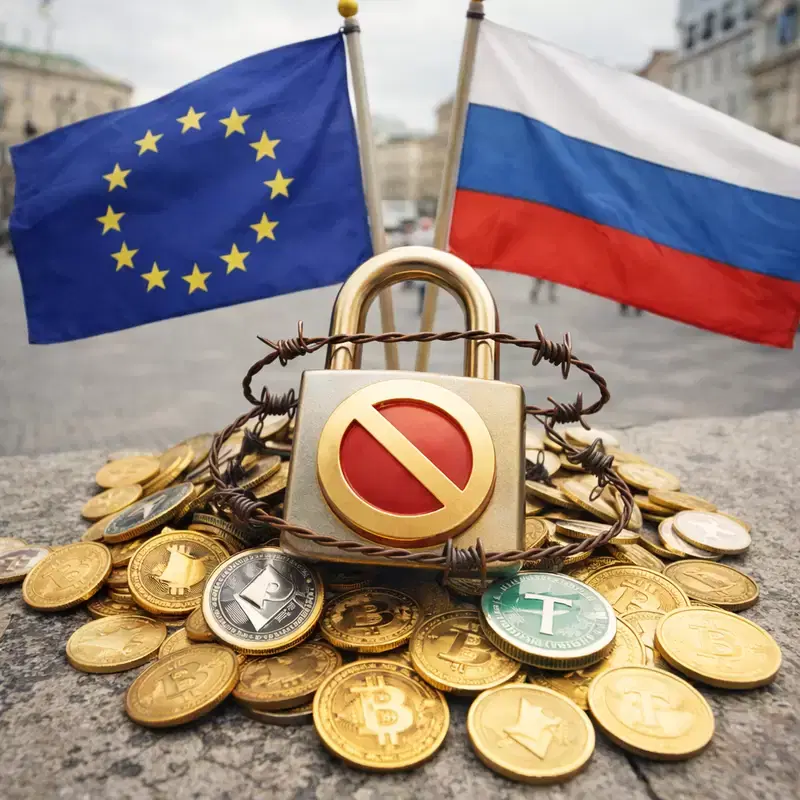
▲ European Union (EU), Russia, virtual assets, cryptocurrency trading / ChatGPT generated image
The European Union (EU) has announced powerful additional sanctions, including stablecoins and central bank digital currencies (CBDCs), to completely block Russia's attempts to evade sanctions using cryptocurrencies.
According to a report by the cryptocurrency specialized media Cointelegraph on April 27 (local time), the European Commission has expanded the scope of sanctions targeting Russia to include not only virtual asset service providers but also stablecoins and Central Bank Digital Currency (CBDC) payment networks. This measure was taken based on the judgment that Russia is increasingly relying on cryptocurrency transactions to circumvent international financial sanctions. The EU has completely prohibited all exchange activities with Russian asset service providers as well as decentralized platforms that enable cryptocurrency trading.
The core of the sanctions is the prohibition of the use of stablecoins pegged to the Russian ruble and central bank digital currencies being developed by the Russian central bank. The European Commission stated that this 20th package of sanctions is designed to precisely target Russia's energy and financial sectors. European Commission President Ursula von der Leyen confirmed her unwavering support for Ukraine in a meeting with Ukrainian President Volodymyr Zelenskyy, thereby finalizing these sanctions.
The European Union's policy is to strictly block Russia from funding its war efforts or laundering money through cryptocurrencies. In particular, having detected circumstances where Russia is using virtual assets as a bypass for international trade settlements, the EU has decided to significantly strengthen monitoring and regulation thereof. The Commission emphasized, "This measure will be a tool to pressure Russia to come to the negotiating table on acceptable terms." This reflects the will to maximize financial pressure amid ongoing attacks on Russian civilian infrastructure.
These sanctions broadly include cryptocurrency operators linked to Belarus and entities acting as bridges for specific stablecoins. Virtual asset service providers within the EU must further strengthen their due diligence obligations for Russian customers and immediately freeze assets if wallet addresses linked to sanctioned entities are discovered. Companies in violation will face substantial fines and administrative penalties. The European Union plans to completely erase Russia's operational space within the digital asset market through close cooperation among its 27 member states.
Russia's attempt to introduce a digital ruble has faced severe setbacks in securing external payment networks due to this EU measure. The European Union will continue to complement and block irregular transaction routes using cryptocurrencies in line with technological advancements. As financial escape routes through digital assets are blocked, Russia's economic isolation is expected to deepen further. The international community is watching to see if this decisive action by the European Union can deliver a real blow to Russia's ability to conduct war.
*Disclaimer: This article is for investment reference only and we are not responsible for any investment losses based on it. The content should be interpreted for informational purposes only.*
Newsletter
Get key news delivered to your email every morning
to leave a comment.