
to leave a comment.
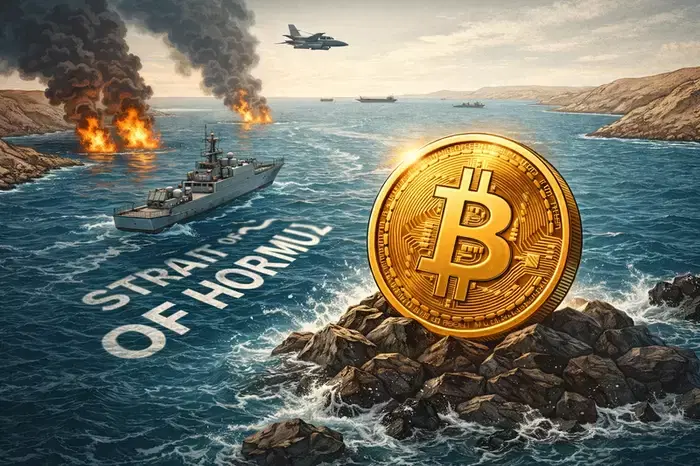
▲ Strait of Hormuz blockade, what happens to Bitcoin/ChatGPT generated image ©
As peace talks between the US and Iran reached a stalemate, increasing macroeconomic uncertainty, the mixed performance of the New York stock market is also casting a strong wait-and-see attitude and downward pressure on the virtual asset market.
According to CoinMarketCap, a cryptocurrency market data aggregator, on April 28 (local time), the global virtual asset market capitalization (Market Cap) showed weakness, falling 1.82% from the previous day to 2.57 trillion dollars. The leading cryptocurrency, Bitcoin (BTC), traded at $76,910.70, down 1.76% from 24 hours ago, giving up the $77,000 mark. Ethereum (ETH), the second-largest by market cap, plunged 3.28% to $2,290, and XRP (Ripple) also fell 2.61% to $1.39. Solana (SOL) and Dogecoin (DOGE) also dropped 3.22% and 1.33% respectively, indicating a general downturn for major altcoins. The Fear & Greed Index, which reflects market sentiment, pointed to 42, remaining in a tense neutral state.
This overall decline in the coin market aligns with the mixed close of the New York stock market overnight. On the 27th, at the New York Stock Exchange (NYSE), the Dow Jones Index fell 0.13%, while the Nasdaq Index closed up 0.20%, buoyed by the strong performance of some tech stocks like Nvidia, which rose 4%. The biggest reason for the overall market hesitation is the failure of face-to-face negotiations between the US and Iran, after which both sides have failed to find a clear compromise. Iran proposed opening the Strait of Hormuz and resuming nuclear talks, but the US White House is showing caution, stating it is under internal discussion, while President Donald Trump is increasing pressure, arguing that the current maritime blockade measures are effective.
As geopolitical risks show signs of prolongation, international oil prices are soaring daily. Brent crude, a global benchmark, surged to $108 per barrel, fueling concerns about re-igniting inflation. This immediately led to anxiety about US monetary policy, sharply contracting risk asset investment sentiment. According to the CME FedWatch Tool, the probability of the benchmark interest rate remaining frozen until the end of December this year has surged to a staggering 68.9%, significantly rolling back expectations for interest rate cuts.
Ultimately, the supply chain shock and soaring oil prices due to the Middle East conflict are fueling fears of prolonged high interest rates, heavily weighing on both the stock market and the overall virtual asset market, including Bitcoin. Investors are extremely reluctant to aggressively expand positions in the face of significant geopolitical variables, focusing instead on profit-taking and risk management.
Market experts predict that the virtual asset market will continue to be a "wait-and-see" market for the time being, lacking clear direction and fluctuating with the flow of macroeconomic news. Until a dramatic breakthrough is achieved at the US-Iran negotiating table or market relief regarding monetary policy is formed, the intense tug-of-war between buyers and sellers around the $76,000 mark and tests of bottom support are expected to continue.
*Disclaimer: This article is for investment reference only, and we are not responsible for any investment losses based on it. The content should be interpreted for informational purposes only.*
Newsletter
Get key news delivered to your email every morning
to leave a comment.