
to leave a comment.
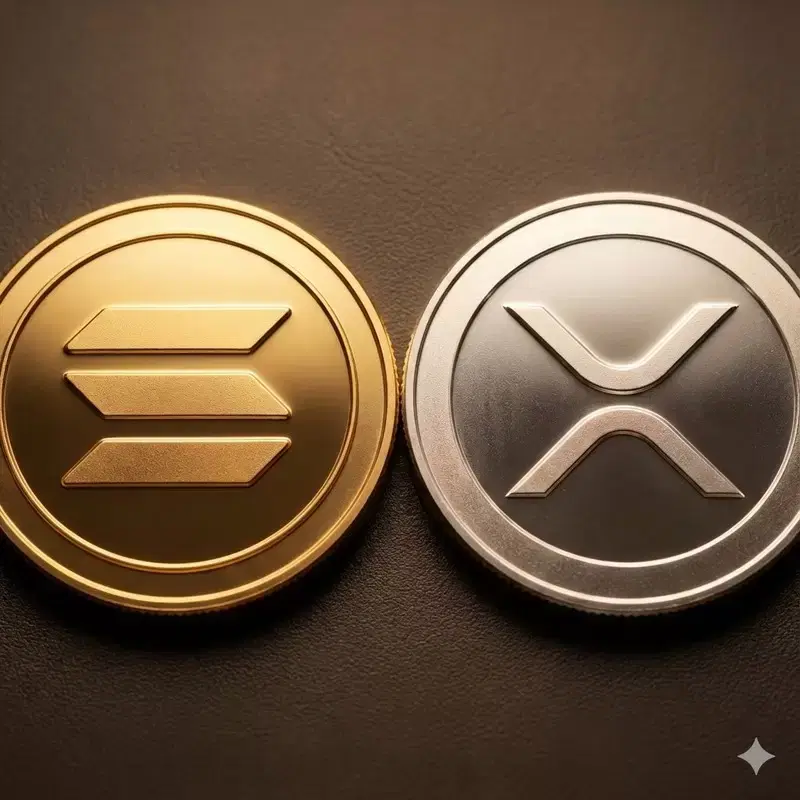
▲ Solana (SOL), XRP / AI generated image
An analysis has been released concluding that when investing $25,000, Solana (SOL) is the asset more likely to yield higher returns by 2030 compared to XRP, given its advantages in institutional fund inflows and market capitalization scalability.
According to a 24/7 Wall St. report on April 27 (local time), a comparison of future returns when investing the same amount in XRP and Solana identified the market capitalization structure, rather than simply the quantity held, as a key variable determining returns. Based on XRP at $1.43 and Solana at $86.27, a $25,000 investment secures 17,482 XRP and 290 SOL, respectively. While XRP holds an advantage in quantity, there's a gap in market capitalization, with XRP at $88.1 billion and Solana at $49.8 billion. The analysis suggests that Solana has greater upside potential because it requires significantly less capital for the same price increase.
The disparity in returns is also evident in the 2030 price scenarios. Under a conservative assumption, if XRP reaches $5, the investment would be approximately $87,400. If Solana reaches $335 during the same period, it would record $97,150. In a mid-range scenario of XRP at $10 and Solana at $1,000, the gap widens further to $174,800 and $290,000, respectively. In a bullish scenario, if Solana rises to $3,211, a $25,000 investment would increase to $931,000, whereas XRP is projected to remain around $489,500 if it reaches $28.
XRP's potential for appreciation largely depends on the passage of the CLARITY Act, a U.S. cryptocurrency market structure bill. If the bill passes, up to $8 billion in spot ETF funds are expected to flow in within the year, potentially laying the groundwork for a price increase. Conversely, if legislation is delayed, there's a possibility of the price falling to between $0.5 and $1. XRP's high dependence on regulatory variables is pointed out as a structural risk.
Solana has secured its own upward momentum based on its technical scalability and ecosystem growth. With the completion of the Alpenglow upgrade, transaction finalization time is expected to be reduced to less than 1 second. It already processes over $1 trillion in economic activity quarterly, and institutional fund inflows are significant. According to Bloomberg Intelligence data, 49% of Solana spot ETF assets are comprised of institutional investor funds, which is significantly higher than XRP's 16%. This structure is considered a factor that enhances its resilience in a downturn.
From a long-term holding perspective, analysis suggests that Solana surpasses XRP in terms of profitability and stability. XRP has high upside potential if regulations pass but significant downside risk if they fail. Solana, on the other hand, is likely to maintain a more stable growth path based on institutional funds and its technological roadmap.
*Disclaimer: This article is for investment reference only, and we are not responsible for investment losses based on it. The content should be interpreted for informational purposes only.*
Newsletter
Get key news delivered to your email every morning
to leave a comment.