
to leave a comment.
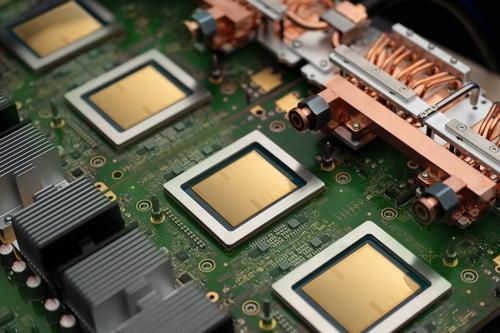
Completion of vertical integration for chips, cloud, models, and agents... Equipped with both infrastructure and AI
To secure hegemony in the era of artificial intelligence (AI), Google chose a two-pronged strategy, targeting both AI agents and chips.
On the 22nd (local time), Google announced its 'Gemini Enterprise Agent Platform', an enterprise agent tool, signaling a direct confrontation with OpenAI, Claude, and others, while challenging Nvidia with its 8th generation AI chips, 'TPU (Tensor Processing Unit) 8t and 8i'.
◇ Joining the OpenAI and Anthropic Agent War
Currently, the most certain revenue source in enterprise AI is the coding market used by developers.
In this market, OpenAI's Codex and Anthropic's Claude Code are competing, but Google's products have received relatively less attention in this market.
The 'Gemini Enterprise Agent Platform' unveiled by Google today is a tool that allows agents to be created without coding knowledge, targeting a wider range of users, including developers and general office workers without development knowledge.
This is interpreted as a move to expand the target customer base, go beyond the coding tool market, and seize leadership in the entire agent market, which is soon to become the mainstream of enterprise AI.
As if to gradually conquer the market, Google has made it possible to use not only its own Gemini models but also competitor Anthropic's Claude models on the platform.
Thomas Kurian, CEO of Google Cloud, emphasized, "This is not about stringing together fragmented services, but about providing a comprehensive foundation for innovation."
◇ Challenging Nvidia with a chip separation strategy
Google also sought a transition in its hardware infrastructure to independently support the agent platform.
By separating the 8th generation TPUs into training and inference versions, the high-computational TPU 8t can be used for training foundation models, and the fast-inference TPU 8i can be used for operating agents.
This AI chip sector serves as a logistical base supporting the agent platform war, but it is also another battlefield in itself.
Google's release of separate training and inference chips is similar to Nvidia's recent strategy.
Nvidia added an inference-only Language Processing Unit (LPU) produced by Groq, which it indirectly acquired, to its Vera Rubin AI supercomputer ecosystem, in addition to the Rubin Graphics Processing Unit (GPU).
Google's TPU 8t corresponds to the Rubin GPU, and TPU 8i corresponds to Groq's LPU, essentially launching a counter-offensive to challenge Nvidia's monopolistic position.
Structurally, both TPU 8i and Groq LPU are expensive and take up significant area, but they share the commonality of relying on high-speed S-RAM for data transfer.
This is to resolve the main bottleneck in inference operations, which is the process of data moving between the computational area and the data storage area.
The reason why AI chip manufacturers like Nvidia and Google are rushing to release inference-only chips is that the demand for inference will increase more than training in the process of running numerous agents.
Amin Vahdat, Google's Senior Vice President (SVP) who oversaw TPU development, explained, "As AI agents emerge, we determined that chips specialized for training and service (inference), respectively, would be beneficial."
◇ Completion of 'full-stack' AI vertical integration
Through the products announced today, Google has achieved vertical integration of AI, ranging from chips to cloud, AI models, developer tools, and agent tools.
Cloud competitors such as Amazon and Microsoft (MS) have also recently released and utilized their own chips like 'Trainium' and 'Maia', but Google has experience producing and operating custom chips since 2015.
Google's TPU has a strong position, so much so that Anthropic, a frontrunner in AI model competition, has committed to large-scale use.
Following this infrastructure competitiveness, Gemini is also in the leading group in AI model competition, regarded as a "big three" alongside ChatGPT and Claude.
In developer tools and agent tools, Google has an advantage over OpenAI and Anthropic in terms of sales and marketing to cloud customers.
Based on this position, Google is targeting the 'agent economy' area, which is considered the next front line of AI competition.
CEO Kurian's emphasis that "the transition to an agent-driven enterprise is the future all companies must move towards" and that "Google Cloud's technical preparations are complete. Now is the time for companies to build their growth engines" is also interpreted as being based on this confidence.
Newsletter
Get key news delivered to your email every morning
to leave a comment.