
to leave a comment.
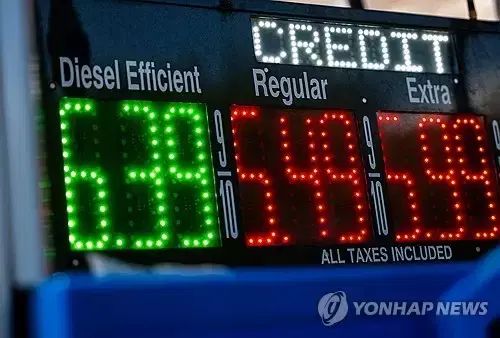
The price of oil at a gas station in New York, USA
The ultimate true cost for the United States of a war with Iran is highly likely to exceed $1 trillion (approximately 1,476 trillion won) over the next 10 years, and the poor will ultimately pay the price, the British daily Guardian asserted in an editorial on the 21st (local time).
The Guardian made this assertion in an editorial titled 'The True Cost of the Iran War: Bombs Kill People, But So Do Economic Repercussions.'
The newspaper predicted, "Costs accumulate over time. However, while the suffering is widespread, it is never evenly distributed. Rising energy, food, and fertilizer costs will increasingly hit poor and import-dependent countries."
It also pointed out that while Iran's economy was already in a desperate state due to long-standing sanctions and national failures, it was designed to withstand coercion, and the Iranian regime has so far survived military and strategic pressure.
According to The Guardian, the US Department of Defense reportedly briefed that the military cost for the first six days of the war was $11.3 billion (approximately 16.7 trillion won), and the general consensus is that even this is a significant understatement.
Linda Bilmes, a government finance expert at Harvard University, estimated earlier this month that the total cost of this war would reach $1 trillion, considering factors such as interest payments and long-term costs related to veterans.
However, these direct costs are just the beginning, and the total cost will increase further when the economic impact is included.
According to estimates by the American Enterprise Institute (AEI) cited by The Guardian, the total cost that an average American household would have to bear, including rising oil prices, is $410 (605,000 won), while British households are estimated to lose £480 (960,000 won) annually.
USS Abraham Lincoln, an aircraft carrier that participated in the Iran War last March
The United Nations Development Programme (UNDP) analyzed that Arab countries faced an economic contraction of $120 billion (approximately 177 trillion won) to $194 billion (approximately 286 trillion won) in just one month after the outbreak of the war.
In particular, with rising food prices, the poorest are expected to be hit the hardest.
The World Food Programme (WFP) projected last month that the number of people experiencing severe food shortages, particularly in Asia and Africa, would increase by 45 million.
The Guardian quoted Tom Fletcher, UN Under-Secretary-General for Humanitarian Affairs and Emergency Relief Coordinator, as emphasizing, "It is appalling that money that could have saved 87 million lives is being wasted on taking lives."
It further pointed out that more lives would be lost due to the economic repercussions of this war, stating, "Even if peace comes tomorrow, the damage already done will not be undone. However, the longer the war continues, the greater the extent of its destruction."
Newsletter
Get key news delivered to your email every morning
to leave a comment.