
to leave a comment.
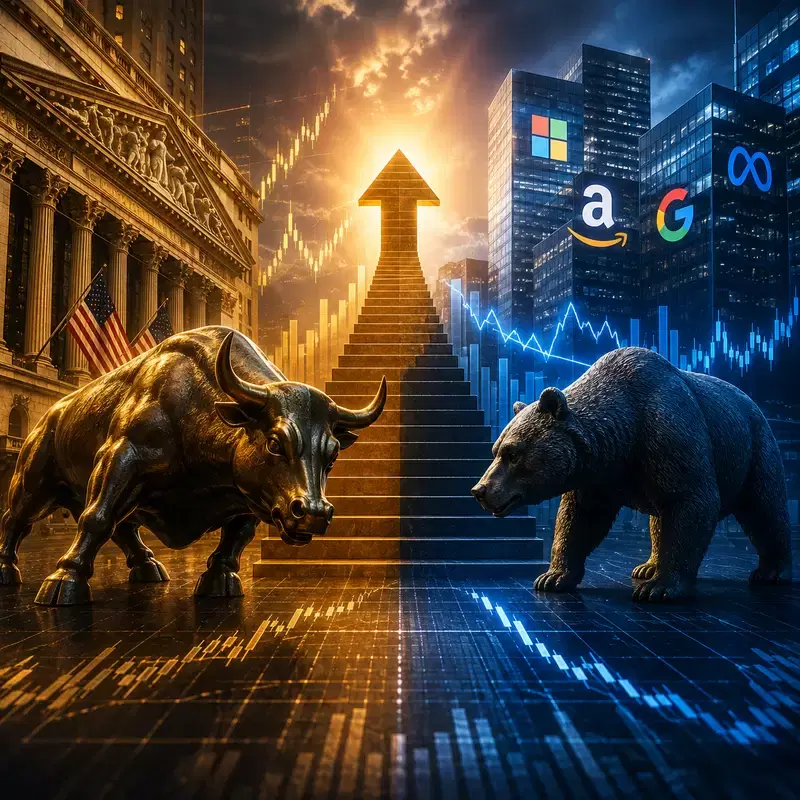
▲ U.S. stock market, bull market, bear market, U.S. tech stocks/AI-generated image
A diagnosis has emerged that in an era where half of the S&P500 consists of tech stocks, the stock market has diverged from the economy more than ever before.
Nick Colas, co-founder of DataTrek, pointed out in an interview with CNBC on October 23 (local time) that the S&P500 and Nasdaq were falling due to concerns about AI spending, while oil prices continued to rise due to geopolitical tensions. The question was what message was embedded in the reversal of the ironclad correlation between oil prices and bond yields, and between bonds and stocks.
Colas explained that oil prices and interest rates moved together for about 10 years. This relationship broke in mid-September. Oil prices began to fall, but interest rates rose. He saw this day as a clue. He stated that concerns about how much AI companies can raise capital are breaking the momentum of real interest rates, which have been driving nominal interest rates. He called the 10-year yield falling below 5% a great relief. The interviewer pointed out that this decline could be a sign of a significant economic slowdown, and if combined with a decline in financial stocks, it could paint a picture of a struggling economy. Colas responded that it depends on which part of the economy one looks at, and that the K-shaped economy still persists. He added that thousands of people at the top of the K-shape being reduced as companies withdraw their IPOs could also be a factor in the bearish sentiment. However, he viewed today's market judgment as meaning that AI funding would not come in as much as thought or feared, thus reducing the pressure on real interest rates.
The interviewer noted that rising Treasury yields were linked to overheating AI capital expenditure and had also led to predictions that the Federal Reserve (Fed) might have to act further. No one expected a hike next week, but the probability of a hike had dropped to the bottom. When asked if this trend was a common check in a long trend, Colas replied, "Absolutely." He attributed this to the results of Moore's Law, which has been slowly returning in the background for 40 years. Semiconductors have become increasingly powerful with the same dollar of computing. He explained that although there were significant setbacks like in 2000 and 2002, the overwhelming trend has not changed.
As a result, tech stocks and big tech account for 50% of the S&P500. Half of the index is this trade. This is higher than about 28% for oil-related stocks in 1980 and 30-32% for tech stocks in 2000. Colas stated that Moore's Law has literally dominated the S&P500, and this trend will not change. When asked if there would be a time when the market broadens, he replied, "Until any other industry can double its performance per dollar every two years." When it was pointed out that the S&P500 moved in a different direction from most stocks a record number of days this year, he said that the stock market has never been the economy, and now it will be less the economy than ever before.
Colas revealed that DataTrek advises concerned clients to go with the S&P500 equal-weighted index, or RSP. This index is highly diversified, with tech stocks accounting for 16%. He stated that the U.S. economy and businesses have done well in the long run, but the market-cap-weighted S&P500, which everyone watches, is the trade we have now. When asked if, with interest rates coming down, one should go into the housing sector, which was hit hardest, he replied, "Absolutely," saying he had written about it the day before. Housing builders saw a significant rebound that day.
[Key Article Summary]
-Colas stated that tech stocks and big tech account for 50% of the S&P500, surpassing approximately 28% for oil-related stocks in 1980 and 30-32% for tech stocks in 2000, indicating that the stock market has diverged from the economy more than ever before.
-He explained that the approximately 10-year connection between oil prices and interest rates broke in mid-September, and concerns about AI funding are breaking the momentum of real interest rates.
-DataTrek recommends RSP, which has a 16% tech stock weighting, to concerned clients and responded "absolutely" regarding the housing sector.
*Disclaimer: This article is for investment reference only and we are not responsible for investment losses based on it. The content should be interpreted for informational purposes only.*
Newsletter
Get key news delivered to your email every morning
to leave a comment.