
to leave a comment.
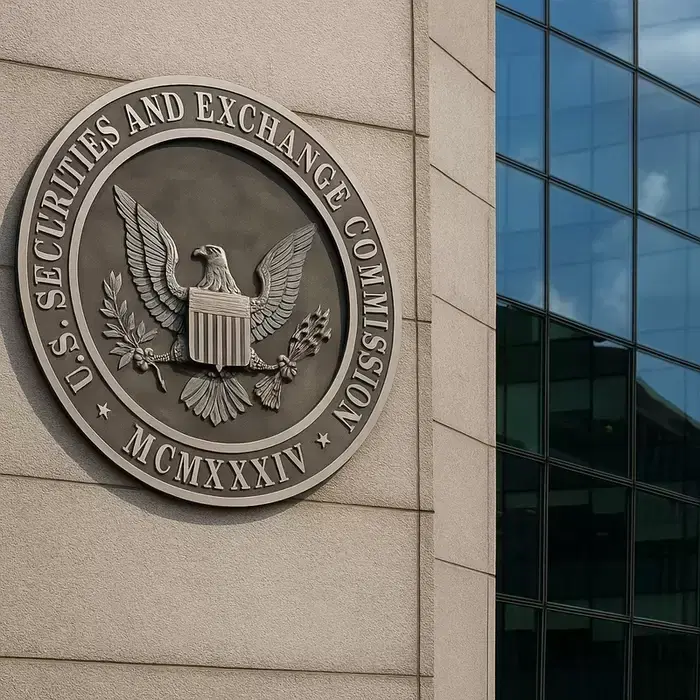
▲ U.S. Securities and Exchange Commission (SEC) / ChatGPT generated image ©
The U.S. Securities and Exchange Commission (SEC) has opened the way for real U.S. listed stocks to be traded 24 hours a day on the blockchain. By allowing a 5-year regulatory exemption for almost instant settlement of tokenized securities with the same dividend and voting rights as regular stocks, smart contract blockchains such as Ethereum (ETH), Solana (SOL), and Avalanche (AVAX) have emerged as the stage for experimenting with U.S. stock market infrastructure.
According to investment media The Motley Fool on September 30 (local time), the SEC issued an Innovation Exemption order on September 17, allowing qualified blockchain-based platforms to tokenize and trade actual U.S. listed stocks for the next five years without registering as formal stock exchanges. Tokenized Securities Venues (TSVs) can settle trades almost instantly instead of the usual one-day settlement on business days in existing markets, and 24-hour trading is also possible, not limited to regular trading hours. This exemption expires in September 2031.
The key is not simply synthetic tokens that track stock prices, but the actual transfer of stock rights. Tokenized stocks traded on TSVs must provide shareholder rights, including the same dividends and voting rights as regular stocks, and actual stocks are held behind each token. The SEC excluded synthetic stock tokens from some overseas cryptocurrency exchanges that only track prices and do not provide ownership. Since no specific blockchain is designated, smart contract platforms such as Ethereum, Solana, and Avalanche can be utilized for transaction processing.
However, the SEC strictly limited the scale of the experiment. A single TSV can handle a maximum of 75 large-cap stocks and process up to 0.25% of the typical daily trading volume for individual stocks. For small-cap stocks, up to 250 stocks and 2.5% of the daily trading volume are allowed. For example, if a stock trades approximately 50 million shares a day, the maximum volume a TSV can process is 125,000 shares. Companies also have the right to refuse tokenization. If a third party wishes to tokenize a specific company's stock, they must notify the company 30 days in advance, and the company can object.
24-hour trading also comes with new risks. Because TSVs use Automated Market Makers (AMMs), prices are determined by the asset ratio in the liquidity pool, not the best price in the overall securities market. As a result, token prices may move higher or lower than actual stock prices late at night or on weekends when trading volume is low. Rules guaranteeing the best bid/ask price in the regular market do not apply either. If investors store tokens directly in a digital wallet, there is a risk of losing access to assets if they lose their private key, and margin trading and credit provision are also not allowed on TSVs. Stablecoins or tokenized money market funds, rather than dollars, are used for transactions.
There will be no immediate changes for general investors' existing securities accounts, index funds, or retirement pensions. Exchanges must disclose detailed information at least 30 days before starting services, and the first relevant applications are suggested to appear next quarter. The Motley Fool evaluated that the long-term significance of this measure lies more in the almost instantaneous settlement using blockchain and public ledger-based ownership records than in 24-hour stock trading itself. It explained that if this 5-year limited experiment succeeds, it could form the basis for designing a regulatory framework that makes the stock market's trading and settlement infrastructure faster and cheaper in the future.
*Disclaimer: This article is for investment reference only and is not responsible for investment losses based on it. The content should be interpreted for informational purposes only.*
Newsletter
Get key news delivered to your email every morning
to leave a comment.