
to leave a comment.
Over 90% of target items exempt from additional tariffs, only Most Favored Nation (MFN) rates apply
Leaders of both countries instructed implementation at the summit… First meeting of agriculture working group within the year
As a follow-up to the economic and trade agreement endorsed at the US-China summit, China revealed items subject to reciprocal tariff reductions, amounting to 30 billion dollars (approximately 40.8 trillion won) for each side.
China included US agricultural products and coal among the items subject to tariff reductions, while the United States included Chinese toys and home appliances.
On the 28th, China's Ministry of Commerce announced on its website the specific items, stating that the US and China had agreed on a list of reciprocal tariff reduction items worth '$30 billion for $30 billion' during the 8th economic and trade negotiations held in New York and Washington, D.C. from the 20th to the 23rd.
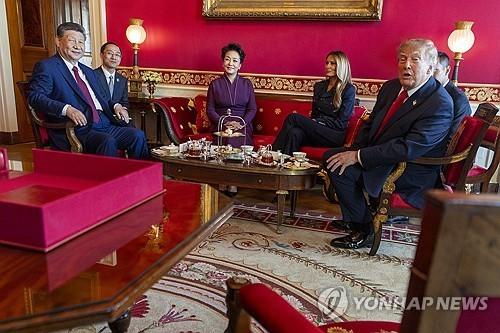
According to the 'Agreement on 8 Achievements' of the US-China summit, which China's Ministry of Foreign Affairs released on the 26th, the leaders of both countries acknowledged the outcomes of the economic and trade negotiations, including reciprocal tariff reductions totaling $30 billion and the establishment of a trade council, and instructed their implementation.
China's tariff reduction targets included US agricultural products, personal care products, medical devices, and coal.
The US side decided to lower tariffs on approximately $30 billion worth of goods, including Chinese toys, home appliances, baby products, kitchen and bathroom items, and holiday gift items.
Notably, for over 90% of the goods included in the tariff reductions, the US and China agreed to eliminate all additional tariffs they had imposed on each other and apply only Most Favored Nation (MFN) rates.
Both countries plan to implement the tariff reduction measures simultaneously after completing their respective domestic legal procedures.
Earlier that morning, China's Ministry of Commerce announced through an explanatory document on the results of the 8th US-China economic and trade negotiations, issued in the name of the head of the Department of American and Oceanian Affairs (司, equivalent to a 'Bureau' in a Korean central ministry), that tariffs on US coal would be included in the reciprocal tariff reduction targets.
The Ministry of Commerce emphasized, "This measure will help China expand its imports of US coal in 2027 and 2028," adding, "Imports of US coal will complement China's domestic coal market while providing stable revenue and jobs for the US coal industry."
In the agricultural sector, following the principal agreement in May to include certain agricultural products in the tariff reduction targets, both sides decided to launch a specific consultative body.
Both countries agreed to establish an agricultural working group under the US-China Trade Council, co-led by China's Ministry of Commerce and the Office of the United States Trade Representative (USTR), and to hold its first meeting before the end of this year.
The Ministry of Commerce stated that it would continue to urge the US side to address China's concerns in the agricultural sector through the working group meetings.
A principal agreement was also reached in the financial services sector.
China decided to review applications from foreign financial service institutions, including US-funded ones, for operations and branch establishments in China in accordance with relevant laws and regulations, and to decide on their approval.
China also stated that it had requested the US side to provide a fair, transparent, and stable policy environment for Chinese financial institutions.
Regarding the US-China Investment Council, the economic and trade teams of both countries agreed to regularly discuss potential investment opportunities and barriers, enhance policy transparency and predictability, and address reasonable concerns of businesses.
Both countries also exchanged views on expanding direct passenger flights between the US and China and agreed to continue communication on increasing flights and related matters.
Additionally, the next meeting for artificial intelligence (AI) dialogue is scheduled to be held before the end of November.
The Ministry of Commerce emphasized that regarding the decision to extend the 'trade truce,' which was set to end on November 10, for two months until January 10 next year, the possibility of further extensions would continue to be discussed.
China's Ministry of Commerce stated, "This extension provides time to review the implementation of existing agreements and consider how to develop future economic and trade relations," adding, "We will explore options for further extensions through high-level economic and trade consultations by the end of the year."
Newsletter
Get key news delivered to your email every morning
to leave a comment.