
to leave a comment.
Chairman of the Supervisory Board: "Focus on connectivity and computing... Secure dominance with clusters and supernodes"
A senior official from Huawei, the Chinese telecommunications equipment maker at the forefront of the US-China technology competition, has set the goal of becoming "the Nvidia of information and communication technology (ICT) and computing."
According to Chinese media outlets such as Yicai and Sina Technology on the 16th (local time), Guo Ping, Chairman of Huawei's highest supervisory body, the Supervisory Board, made these remarks in a recent conversation with new employees, answering a question about his view on the self-development of large language models (LLMs) in terms of AI industry strategy.
Chairman Guo emphasized, "Huawei's goal in the ICT business and computing domain is to become Nvidia," and "Huawei's core advantage lies not in possessing self-developed LLMs, but in supporting customers to create excellent LLMs."
This means supporting various LLMs worldwide to run efficiently on Huawei's Ascend and Kunpeng products, as well as supernodes and clusters.
Chairman Guo stated that Huawei is focusing on the connectivity and computing domains and has no plans for business expansion.
When asked about Huawei's advantages compared to Nvidia's business moat, which lies in advanced processes, software-hardware collaboration, and the CUDA software platform ecosystem, he pointed to supernodes, among other things.
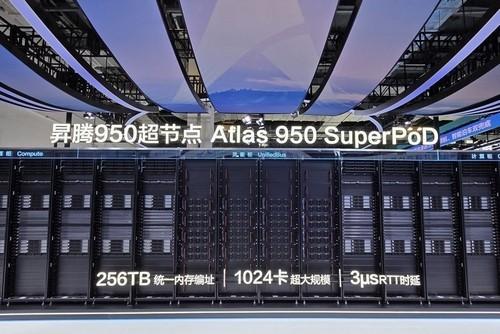
A supernode is a technology that binds thousands of AI chips into a single computing pool through high-speed interconnect technology. China, facing US restrictions, is at a disadvantage in individual chips but plans to overcome this through its advantage in chip-binding systems.
Chairman Guo said, "As Huawei is restricted in advanced processes, there is a greater need to integrate design and manufacturing. We must leverage comprehensive advantages to compensate for technological shortcomings," referring to Huawei's 'Tau Law,' proposed to overcome the limits of 'Moore's Law.'
He then quoted Liang Wen-feng, founder of Deepseek, who stated that Nvidia's CUDA ecosystem moat is rapidly eroding due to AI technology development, adding, "Huawei secures overall superiority through the development of clusters and supernodes."
Regarding the outlook for AI, he stated, "AI could be the final technological revolution for human society, and we must secure a competitive advantage in this revolution."
He also said, "In future society, a few top geniuses will create AI, but the majority will use AI," and emphasized that the ability to ask questions when using AI is important, leading to increased attention for literature and philosophy majors.
He assessed that China lags in 'computing' among the three elements of AI but has an advantage in 'data' and is at a similar level in 'talent.'
Newsletter
Get key news delivered to your email every morning
to leave a comment.