
to leave a comment.
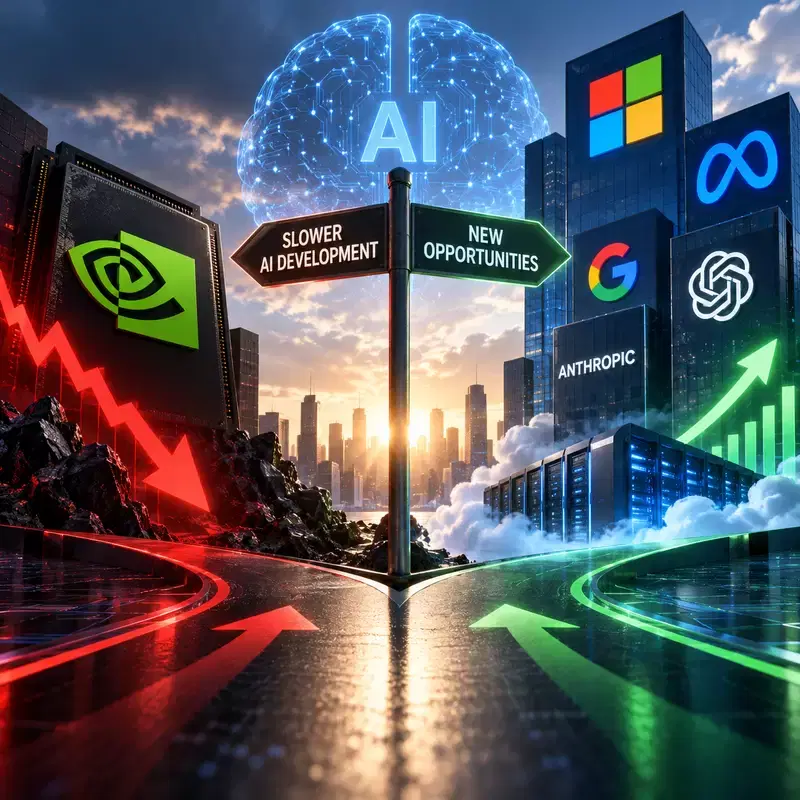
▲ Nvidia (NVDA), Microsoft (MSFT), Meta (META) / AI Generated Image
An analysis has emerged suggesting that if the theory of controlling the pace of AI development materializes, it would be bad news for Nvidia (NVIDIA, NVDA), but could be an opportunity for Microsoft (Microsoft, MSFT) and Meta Platforms (Meta Platforms, META) to catch up.
According to Barron's on September 15 (local time), as major US AI companies discussed slowing down the pace of advanced competition and strengthening safety measures, Wall Street's attention shifted to beneficiaries and victims. Barron's analyzed that if actual development speed control occurs, the interests of AI model developers, semiconductor companies, and cloud operators could diverge significantly.
OpenAI and Anthropic were named as potential beneficiaries. The reason is that if the competition to develop advanced models slows down, it could help improve profitability by reducing massive cloud computing costs. Barron's also suggested that in a situation where competition with cheaper AI models is intensifying, controlling the development speed could further stimulate price competition.
Alphabet (Alphabet, GOOGL), Meta, Microsoft, and SpaceX were classified as companies that could gain time to catch up. This is because if the development pace of leading AI models slows down, competitors will have more time to narrow the technology gap. Especially for large tech companies that have continued massive AI investments, delaying additional infrastructure spending is also a positive factor.
On the other hand, the burden on semiconductor companies, including Nvidia, could increase. This is because if the speed of AI model training decreases, the growth in demand for advanced computing equipment could also slow down. Cloud operators such as Amazon (Amazon, AMZN), Microsoft, and Oracle (Oracle, ORCL) might see slower growth in AI training revenue, but they could improve cash flow by delaying data center investments, so their impact is expected to be mixed.
It is uncertain whether the actual control of AI development speed will be maintained for a long time. Former US President Donald Trump downplayed the need for strong government regulation, and Barron's also pointed out that it would be difficult for competitors to slow down simultaneously without government intervention or a high level of trust among companies. If the pace of AI competition changes, the investment landscape, which was semiconductor-centric, could also be reorganized towards large tech companies and software companies, emerging as a key variable.
[Article Key Summary]
- If AI development slows down, OpenAI and Anthropic can reduce massive computing costs and improve profitability.
- Alphabet, Meta, and Microsoft can gain time to narrow the technology gap, but Nvidia may face the burden of slowing demand for AI semiconductors.
- Cloud companies are expected to have mixed results, as both a slowdown in AI revenue and cost savings from investment reductions could occur simultaneously.
*Disclaimer: This article is for investment reference only, and we are not responsible for investment losses based on it. The content should be interpreted for informational purposes only.*
Newsletter
Get key news delivered to your email every morning
to leave a comment.