
to leave a comment.
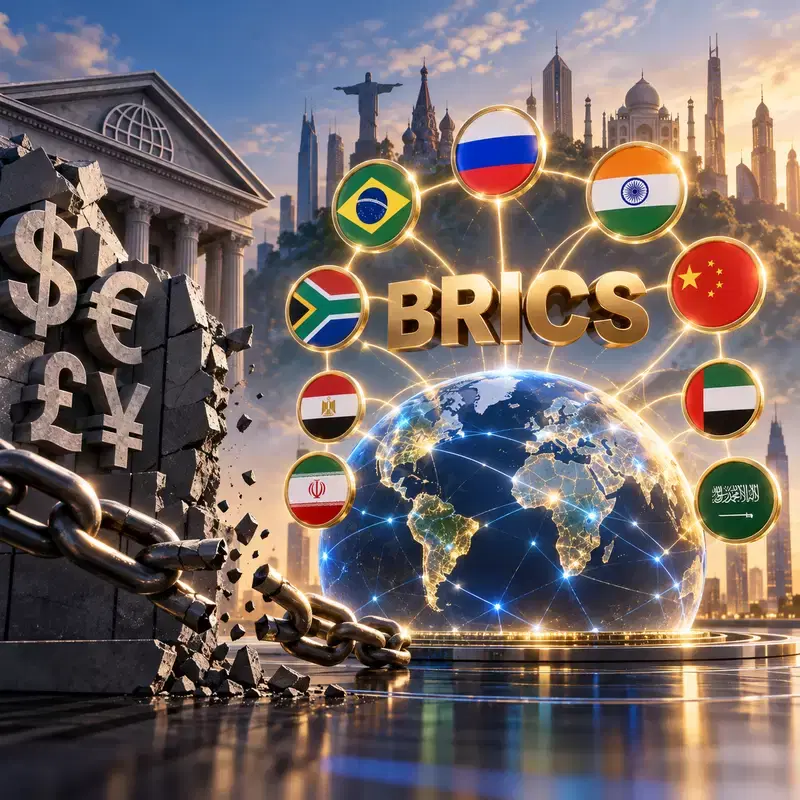
▲ BRICS, Dollar(USD), Euro(EUR), Pound(GBP), Yen(JPY)/AI generated image
Russian President Vladimir Putin emphasized an independent payment network to escape Western financial pressure. However, the biggest barrier within BRICS was identified as trust, not technology.
According to Benzinga on September 11 (local time), Putin emphasized that BRICS nations must build payment and financial infrastructure that is not swayed by external financial pressure. Expanding payments using national currencies was also presented as a key task. Putin's position is that BRICS' economic cooperation is not aimed at specific countries but at increasing the economic interests and financial autonomy of member states.
The establishment of an integrated payment network itself was deemed possible. Ziaad Suleiman, Chairman of the BRICS Business Council's South Africa Digital Economy Working Group, stated, "A BRICS integrated payment system is fully achievable." He further emphasized, "What is needed is an appropriate level of trust and a suitable institutional framework." BRICS has now expanded to 11 member countries, increasing the potential scale of the payment network.
The problem is that each country's financial regulations and data security systems differ. Suleiman pointed out that to connect payment networks between countries, standards for transaction security and data protection must first be established. He said, "Without safeguards, each country cannot help but worry whether its data is safe and whether transactions are properly protected." This explains that building trust between countries comes before technical connection.
Payments in national currencies were also seen as difficult to solve with a single solution. Suleiman explained that multilateral agreements are needed as each member state seeks to use its national currency in trade. The judgment is that a structure for determining the payment currency based on the trade volume of each country and bilateral relations is realistic. He assessed that if the level of integration increases, the efficiency of inter-country remittances could also improve.
While BRICS is strengthening its efforts to reduce dependence on Western-centric financial networks, regulatory coordination, data security, and inter-country trust remain preconditions for building an integrated payment system. As Putin calls for greater financial autonomy, institutional agreement among member states is key for BRICS to truly connect as a common payment network.
[Key Summary of Article]
-Putin emphasized that BRICS must build an independent payment and financial infrastructure that is not swayed by Western financial pressure.
-The BRICS Business Council assessed that an integrated payment system connecting 11 member countries is possible.
-Data security, regulatory frameworks, and inter-country trust were identified as the biggest obstacles to building an integrated payment network.
*Disclaimer: This article is for investment reference only, and we are not responsible for any investment losses based on it. The content should be interpreted for informational purposes only.*
Newsletter
Get key news delivered to your email every morning
to leave a comment.