
to leave a comment.
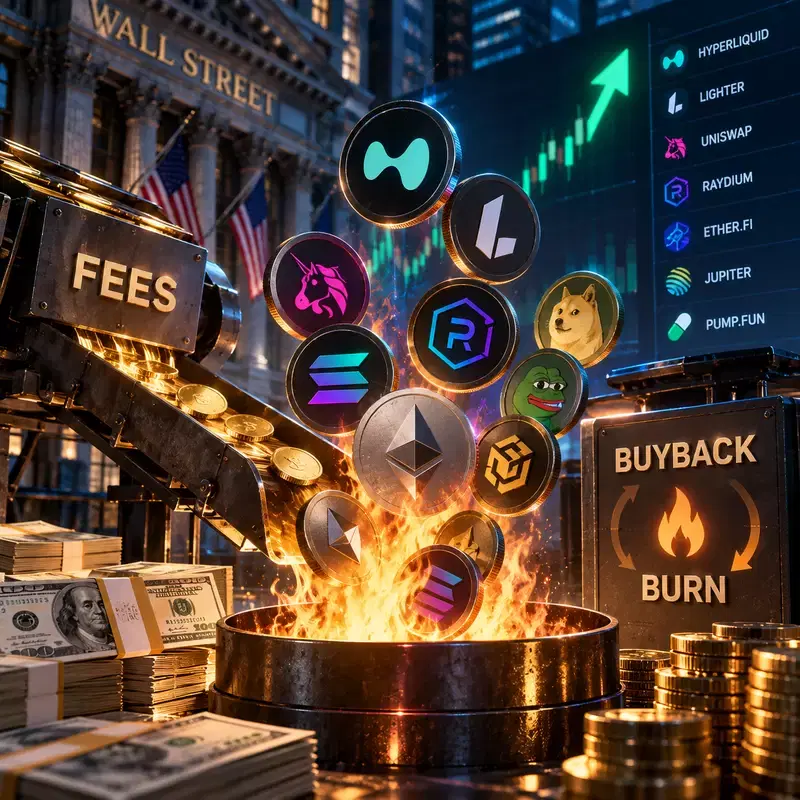
▲ Altcoin, Buyback, Burn/AI Generated Image
The decisive factor in the altcoin market is shifting from 'stories' to 'actual revenue'. Projects that use transaction fees to buy back and burn their own tokens have emerged as a key investment theme in this cycle, according to analysis.
Lark Davis, host of the cryptocurrency podcast The Lark Davis Show, named projects that invest actual protocol revenue into token buybacks and burns as major winners in this cycle during an episode on September 13 (local time). He stated, "The core question is whether actual user transaction fees are used to buy back their own tokens from the market." He argued that a structure where revenue directly leads to a reduction in token supply is more important than simple governance rights.
Hyperliquid (HYPE) was cited as a prime example. Davis explained that Hyperliquid has been using approximately 97% of its protocol fees to purchase HYPE from the market. Over $1 billion in cumulative fees have been converted into token buying demand. He added that Lighter (LIT) is connected to Robinhood chain's perpetual futures trading engine and has a 50/50 revenue sharing structure with Robinhood.
In decentralized exchanges, Uniswap (UNI) and Raydium (RAY) were highlighted. While Uniswap's fees did not go to token holders in the past, it has burned 100 million UNI after a fee structure change, which accounts for 16% of its supply. Raydium has bought back over $190 million worth of RAY, a scale that amounts to approximately a quarter of its circulating supply, Davis explained.
Ether.fi (ETHFI) and Jupiter (JUP) are examples showing different structures. Ether.fi uses ETH withdrawal fees to purchase ETHFI weekly and is expanding its revenue sources through cards, staking, and vaults. In contrast, Jupiter uses 50% of its protocol fees for token burning, but its circulating supply has increased from approximately 1.3 billion JUP at launch to over 3 billion JUP. Davis emphasized that one should not only look at the buyback amount but also consider new issuance and token unlocks.
In the memecoin sector, Pump.fun was mentioned as a key example. Davis stated that Pump.fun has already burned $370 million worth and is one of his top 5 cryptocurrency holdings. Stonk Fun and PONS reportedly burned approximately one-third of their supply within about two months of launch. He argued that "the strategy of finding the top 1-2 projects with the strongest buyback structures in a growing sector" is crucial in this cycle.
[Article Key Summary]
-Lark Davis identified the structure of investing actual fee revenue into token buybacks and burns as a key investment theme in this cryptocurrency cycle.
-Hyperliquid was presented as an example that invested over $1 billion cumulatively, and Raydium over $190 million, into token purchases.
-Davis emphasized that to judge the actual effect of supply reduction, one must check not only the buyback amount but also new issuance and token unlocks.
*Disclaimer: This article is for investment reference only, and we are not responsible for any investment losses based on it. The content should be interpreted for informational purposes only.*
Newsletter
Get key news delivered to your email every morning
to leave a comment.