
to leave a comment.
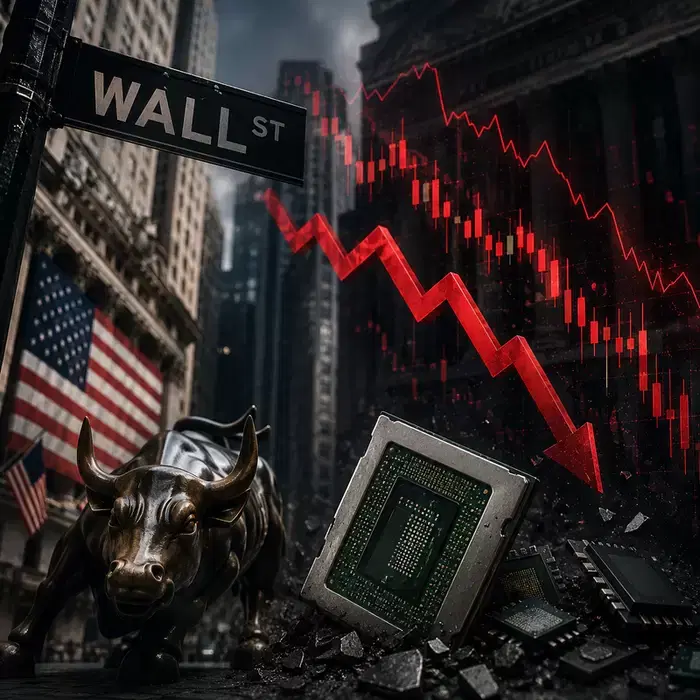
▲ US stock market, Wall Street, Nasdaq, Dow Jones Index, S&P 500, semiconductors, bear market/AI generated image ©
As the US stock market continues its strong performance near all-time highs, a warning has emerged that unusual signals in trading volume and volatility indicators portend a massive economic and stock market collapse. The diagnosis is that, contrary to the market's outward appearance, institutional buying is weak, and inflation and interest rate risks have not been resolved.
According to crypto media outlet Finbold on August 4 (local time), veteran market trader Todd "Bubba" Horwitz stated in an interview with David Lin that he remains wary of the possibility of a large-scale collapse in the long term. He argued that although the Dow Jones Industrial Average, S&P 500, and Nasdaq indices have sharply rebounded recently, overcoming volatility surrounding the US Federal Reserve's monetary policy, the sustainability of the upward trend is low.
The key warning signal Horwitz highlighted is the CBOE Volatility Index (VIX). Typically, when major indices rise strongly, the VIX, which indicates expected volatility, falls. However, despite the recent stock market rebound, the index has barely moved. He analyzed that the volatility index should be much lower than it is now, suggesting that buying momentum is entering an exhaustion phase and large institutional investors are not actively participating in the bull market.
Unusually low trading volume was also pointed out as a risk factor. It was explained that recent market trading volumes are significantly lower than usual, raising doubts about the reliability and sustainability of the bull market. Horwitz assessed that while stock prices can still rise further with low trading volume, the conviction and buying base seen in a healthy bull market are lacking. He also cited weakness in Asian markets, instability of the Japanese yen, and continuous foreign exchange market intervention by various governments as variables that could amplify future shocks.
The interest rate outlook is also not optimistic. Horwitz predicted that inflation remains high, making it more likely for interest rates to rise rather than fall in the coming months. Rising long-term bond yields could add further pressure to stock prices, borrowing costs, and economic growth. Conversely, he warned that even if the Fed were to aggressively cut interest rates, it might not signal economic improvement but rather severe economic weakening or stress in the banking sector. However, he maintained that it is difficult to predict the exact timing of a collapse, and current indicators point to an expansion of risk across the financial markets.
*Disclaimer: This article is for investment reference only and we are not responsible for any investment losses based on it. The content should be interpreted for informational purposes only.*
Newsletter
Get key news delivered to your email every morning
to leave a comment.