
to leave a comment.
Japan utilizes Fed lending program introduced during the pandemic for foreign exchange market intervention
Besant demands higher lending limits from the Fed…WSJ: "Measure to prevent Japan from selling its US Treasury holdings"
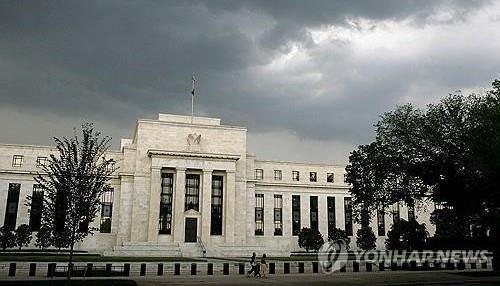
Attention is drawn to the background behind the joint action by US and Japanese foreign exchange authorities to boost the value of the yen, as they publicly mobilized the US central bank's Federal Reserve (Fed) crisis-response liquidity provision program to secure ammunition.
Above all, US Treasury Secretary Scott Besant even requested the Fed to raise the limit of the program, and this is evaluated as a result of the Trump administration's interest in preventing a rise in US Treasury yields, rather than a 'symbol of friendship' between the US and Japan.
The Wall Street Journal (WSJ) reported on the 3rd (local time) that "the Fed's safety net, which was designed to respond to the 2020 dollar shortage but has been rarely used, is now being mobilized for Japan's yen defense funding, a purpose completely different from its original design."
Japanese Finance Minister Satsuki Katayama also announced the joint US-Japan intervention in the foreign exchange market in a statement on the 3rd, stating, "Japan plans to utilize the Fed's 'Foreign and International Monetary Authorities (FIMA) Repurchase Agreement (Repo) Facility' (hereinafter referred to as the FIMA Repo Facility) in the future."
Secretary Besant also stated in an X (formerly Twitter) post on the same day that "the FIMA Repo Facility is an important tool, and I encourage its expansion in the coming months."
Furthermore, in a CNBC interview on the 4th, Secretary Besant stated, "I think it is reasonable for the Fed to consider expanding the repo facility," adding, "I think this is exactly what it was designed for."
The Fed's FIMA Repo Facility, mentioned by Finance Minister Satsuki and Secretary Besant, is a system introduced by the Fed in March 2020 to respond to the pandemic, created to urgently provide dollar liquidity to foreign central banks in crisis situations. It was later converted into a standing facility in July 2021.
The structure is that if a foreign central bank holding a FIMA account pledges US Treasury bonds it holds as collateral to the Fed, the Fed provides dollars to that central bank.
It is distinguished from currency swaps in that foreign central banks pledge US Treasury bonds, not their own currency, and receive dollars.
This was a crisis-response measure taken in consideration that if central banks around the world were to release their US Treasury holdings into the market all at once as credit crunch warnings increased due to the pandemic shock, bond market turmoil could worsen.
Behind the Fed being called upon as a savior to defend the yen's value was the Trump administration's effort to defend US Treasury yields, which had risen to their highest level since 2007.
The WSJ diagnosed the use of the FIMA Repo Facility as "this measure is designed to avoid Washington's greatest concern: Japan selling US Treasury bonds to finance market intervention."
From the US perspective, if Japan chose to sell a portion of its vast US Treasury holdings to support its own currency, it could put additional upward pressure on already rising US Treasury yields, making it an urgent priority to prevent Japan from selling US Treasury bonds.
President Trump said on the 2nd that he had engaged in joint yen support because of "good relations with Japan," but in reality, it was intertwined with the US government's interest in defending against rising US Treasury yields.
The yield on 30-year US Treasury bonds, which serves as a benchmark for US home mortgages, rose to 5.28% on the 31st of last month, reaching its highest level in 19 years since July 2007. A further rise in the 30-year US Treasury yield could increase political burden on President Trump and the Republican Party ahead of the US midterm elections in November.
Meanwhile, the issue of the Fed raising the limit of the FIMA Repo Facility at the request of Secretary Besant is once again raising the issue of the Fed's independence.
The increase in the FIMA Repo Facility limit is a decision of the Federal Open Market Committee (FOMC), the Fed's monetary policy-making body.
Derek Tang, an economist at Monetary Policy Analytics, pointed out to the WSJ that "(the US-Japan coordinated intervention) appears to be a very political project led by the Trump administration," adding, "It raises the question of whether it is truly the Fed's role to enable this."
The position of US Fed Chairman Kevin Warsh also remains unclear.
Chairman Warsh previously stated in a written response to his Senate confirmation hearing that the Fed's independence is relatively less in areas other than monetary policy, but at a recent congressional hearing, he replied that the Fed's dollar lending accounts for foreign central banks are part of monetary policy, the WSJ reported.
Newsletter
Get key news delivered to your email every morning
to leave a comment.