
to leave a comment.
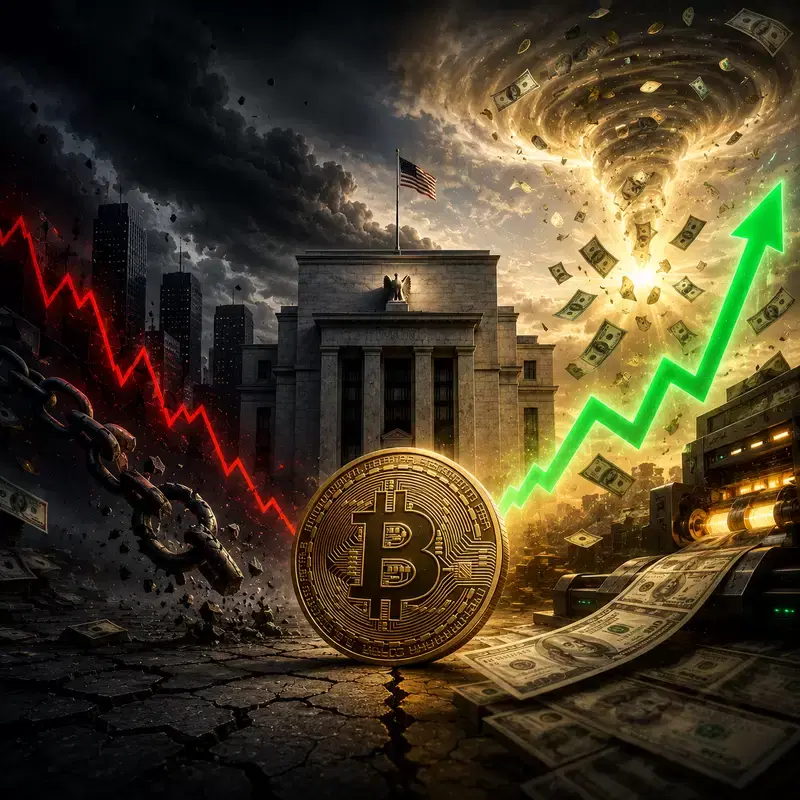
▲ US Federal Reserve (Fed), Bitcoin (BTC), Dollar (USD)/AI Generated Image
An analysis suggests that the Federal Reserve's (Fed) hawkish interest rate freeze may not be evidence of financial market stability but rather a final warning just before a credit market crack. Bitcoin (Bitcoin, BTC) was identified as the asset most likely to rebound fastest once liquidity provision begins, despite a potential sharp drop in the initial shock.
In a video uploaded on August 3 (local time), the cryptocurrency-specialized YouTube channel Coin Bureau compared the current situation, where the Federal Reserve froze interest rates for the fifth consecutive time and three members advocated for rate hikes, to 2007. In 2007, the Fed maintained the benchmark interest rate at 5.25% for 15 months, but as the credit market faltered, it cut rates by 0.5 percentage points in just 10 weeks. Coin Bureau argued that the median period from the last rate hike to the first cut in recent tightening cycles is about 7.5 months, suggesting that a hawkish stance at the end of a tightening cycle may be a signal reflecting a recession belatedly rather than policy credibility.
Analysis indicates that warning signs are already growing louder in the credit market. Nvidia's (Nvidia, NVDA) 5-year credit default swap reached an all-time high of 82 basis points on July 27, jumping 14 basis points in a single day. The private credit default rate hit an all-time high of 6% earlier this year, and US large corporate bankruptcies totaled 372 in the first half, the highest since 2010. Bond issuance by large cloud companies also increased to $244 billion by mid-July, more than double the total issuance of $108 billion for all of 2025.
A diagnosis was also presented that the labor market is weaker than official unemployment figures suggest. New employment in June reached only 57,000, significantly below market expectations of 115,000, and employment for the preceding two months was also revised down by a total of 74,000. While the unemployment rate decreased from 4.3% to 4.2%, approximately 720,000 people exited the labor force, and the labor force participation rate hit its lowest level since March 2021 at 61.5%. The Fed's reverse repurchase agreement (RRP) balance also decreased from approximately $2.5 trillion to $376 million, and bank reserves fell to approximately $3.1 trillion.
Coin Bureau warned that if financial markets begin to collapse, Bitcoin could be sold off first. In March 2020, Bitcoin plunged about 50% from around $8,000 to below $4,000, but by November of the same year, it recovered to an all-time high and then outperformed the S&P and gold for two years. Bitcoin spot ETFs recorded a net outflow of $5.4 billion on a semi-annual basis, and futures open interest increased to approximately $47 billion. In contrast, long-term holders hold about 16.64 million BTC, roughly 83% of the total supply, and were found to have accumulated an additional 50,000 to 100,000 BTC each month.
The future market turning points are a sharp cooling of employment, a tightening of the repurchase agreement market, and a chain of private credit defaults. However, the yield on 30-year US Treasury bonds has risen to 5.2%, the highest since 2007. A key variable is that even if the Fed eases monetary policy, if long-term Treasury yields continue to rise, liquidity may not move into risk assets, potentially weakening Bitcoin's rebound momentum.
[Key Summary of the Article]
-The Fed's hawkish interest rate freeze could be the final stage of a tightening cycle, reflecting credit market cracks belatedly.
-Bitcoin may plummet in the initial financial market shock, but there's a possibility it could rebound quickly once the Fed begins providing liquidity.
-If long-term US Treasury yields continue to rise, the Fed's easing effect could be offset, weakening Bitcoin's rebound scenario.
*Disclaimer: This article is for investment reference only, and we are not responsible for any investment losses based on it. The content should be interpreted for informational purposes only.*
Newsletter
Get key news delivered to your email every morning
to leave a comment.