
to leave a comment.
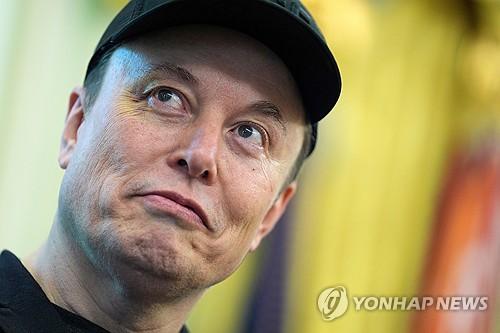
Rebelling against the push to increase investigative powers of the responsible ministry and raise fines
As the Australian government, which was the first in the world to introduce the blocking of social media accounts for minors, pushes to strengthen its blocking policy, Elon Musk's X (formerly Twitter) has revolted, claiming it undermines international law principles.
According to Reuters on the 29th (local time), X recently submitted an opinion to the Australian Senate committee, arguing that the Australian authorities' proposed amendments to social media-related laws "did not adequately consider procedural fairness, privacy protection, the impact on online services in general, and Australia's digital economy."
Previously, last month, the Australian government announced amendments to related laws, including increasing the platform regulatory powers of 'eSafety,' an online safety regulatory body, to enhance the effectiveness of this policy.
Accordingly, eSafety will be able to compel social media companies, partners supplying age verification technology to social media, app stores, and others to submit evidence of what measures they have taken to block accounts of minors under 16.
Furthermore, fines for social media platforms that do not take reasonable measures to prevent users under 16 from holding accounts will be doubled to a maximum of 99 million Australian dollars (approximately 100 billion KRW).
In response, X stated that the amendment "will force individuals outside Australia to provide information and documents simply because they are affiliated with a certain company," and that this "clearly violates" international law principles.
It also added that the amendment "has the potential to severely adversely affect international comity." International comity is not codified international law, but it is a custom and goodwill practiced to maintain friendly relations between nations, including respect for the legal systems of other countries.
Musk also recently criticized Australia's youth social media regulations on his X, calling them "a backdoor way to control internet access for all Australians."
The U.S. House Judiciary Committee has also demanded the appearance of eSafety Commissioner Julie Inman Grant before the committee, stating that Australia's regulations infringe on Americans' freedom of expression and pose a threat of censorship to U.S. Big Tech (large information technology) companies.
In this regard, eSafety explained that it is preparing to sue five social media platforms that have not properly implemented the blocking of minor accounts, but its investigative powers are limited.
As a result, it currently has no choice but to rely on statements from the companies themselves regarding their compliance with regulations, and it does not have the authority to compel age verification technology partners to submit relevant records, making investigations quite difficult.
Regarding this legal amendment, the relevant committee of the Australian Senate is scheduled to disclose its review results on the 25th of next month after a hearing.
Previously, in May, X was ordered by an Australian court to pay a fine of 650,000 Australian dollars (approximately 654 million KRW) for failing to adequately respond to eSafety's inquiries about measures to prevent the spread of child sexual exploitation content.
Newsletter
Get key news delivered to your email every morning
to leave a comment.