
to leave a comment.
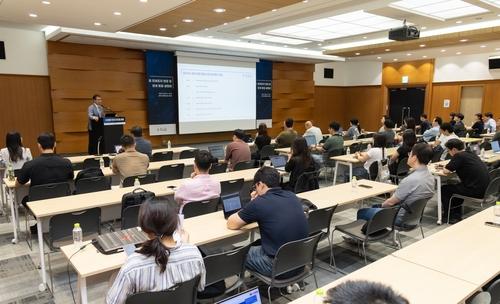
Korea International Trade Association's 'US Tariff Measure Changes and Tariff Refund Briefing'
As the U.S. is expected to maintain its high tariff stance by imposing new tariffs based on Section 301 of the Trade Act, a suggestion has emerged that domestic companies need to reorganize their export strategies and supply chains.
On the 29th, the Korea International Trade Association (KITA) held the 'US Tariff Measure Changes and Tariff Refund Briefing' at COEX in Gangnam-gu, Seoul, sharing information on various tariff measures, including Section 301 tariffs, current status of local tariff refunds, and practical considerations.
About 150 representatives from exporting companies attended the briefing.
Cho Seong-dae, head of KITA's Trade Research Department, introduced the details of the new tariff measures under Section 301 of the Trade Act and the corresponding directions, predicting that the U.S.'s high tariff stance would continue.
Director Cho stated, "Despite controversies over legal justification, the U.S. will continue to maintain country-specific differential tariffs through Section 301 of the Trade Act and product-specific tariffs under Section 232 of the Trade Expansion Act." He added, "Companies should comprehensively consider the upcoming Section 301 overproduction measures when formulating their management and export strategies."
Shim Jong-seon, a partner at Deloitte Anjin, shared trends in the enforcement of Section 232 product tariffs and practical considerations.
Partner Shim explained that the product tariffs on steel, aluminum, and copper have shifted from content-value taxation to total-value taxation, stating, "As the U.S. Customs and Border Protection (CBP) is strengthening import regulations related to forced labor and cracking down on trade fraud to enhance the effectiveness of the measures, thorough supply chain management is necessary."
Additionally, Kim Tae-ju, an executive director at Samjong KPMG, introduced the refund of tariffs imposed by the U.S. based on the International Emergency Economic Powers Act (IEEPA) and the trends in tariff litigation under Section 122 of the Trade Act.
Executive Director Kim explained, "As CBP launched its refund processing system in April, uncertainties have been resolved, and actual refunds are being made." He added, "Since detailed procedures can vary depending on the situation of each company, it is necessary to actively utilize refund opportunities with the help of a customs expert."
Newsletter
Get key news delivered to your email every morning
to leave a comment.