
to leave a comment.
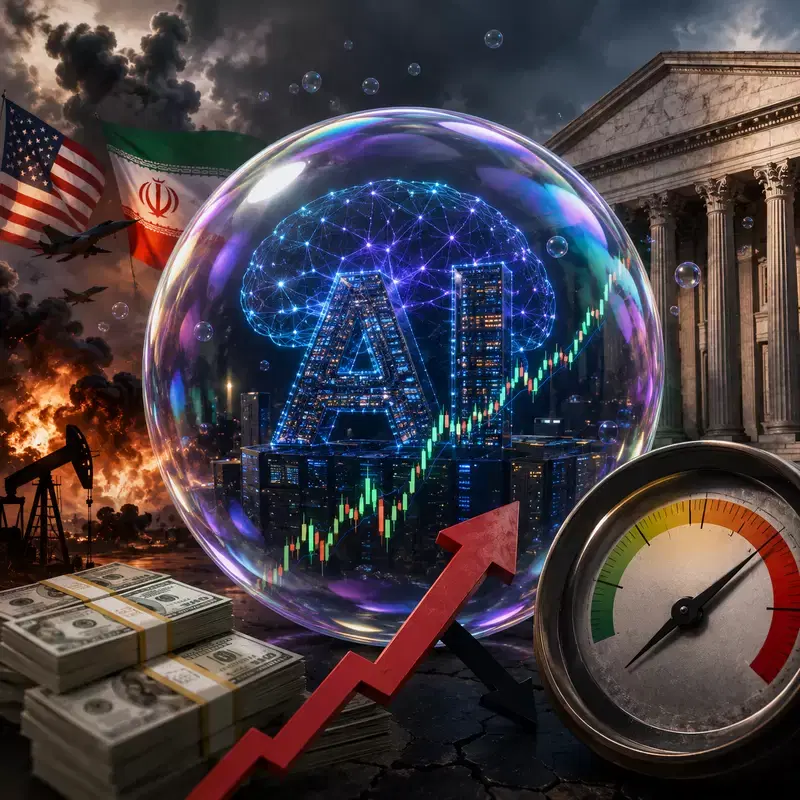
▲ USA, Iran, Artificial Intelligence (AI), Interest Rates/AI Generated Image
Despite the U.S. attack on Iran, the stock market rebounded and oil prices fell. However, Wall Street's diagnosis emerged that the real variable to burst the artificial intelligence (AI) bubble is not geopolitics, but interest rates. Ruchir Sharma, who has studied bubbles for the past 300 years, warned that while the AI market is showing all typical signs of overheating, the bubble could continue to inflate until the 10-year yield reaches 5%.
Ruchir Sharma, chairman of Rockefeller International, stated in an interview with CNBC on July 9 (local time) that cases where geopolitical conflicts have a long-term impact on the market are rare. Sharma said, "Typically, markets fall for about a month and then recover all losses," adding that the same trend has been observed in recent markets. He also pointed out in the same context that despite major supply shocks, predictions of a surge in oil prices did not materialize.
Sharma explained that the global economy is less dependent on energy and oil than in the past. When supply shocks occurred, alternative supply routes were found, and demand was effectively reduced, especially in Asia. He stated, "Geopolitical events are generally overestimated compared to their actual impact," and that the market has once again demonstrated this fact.
On the other hand, his view on the AI market was much sharper. Sharma analyzed bubbles over the past 300 years and concluded that the current AI market virtually meets all typical bubble signs, including over-investment, excessive leverage, overly concentrated holdings, and excessive trading. He said, "We are in a bubble," adding that the steep stock price increases and parabolic movements seen in the semiconductor market are also characteristics of a bubble.
However, he emphasized that the mere fact that a bubble is overheated does not immediately determine its collapse point. Sharma stated, "Big bubbles do not collapse under their own weight. Higher interest rates have always ended big bubbles." He added, "It's hard to talk about the end of the bubble until the 10-year yield reaches 5% or until the U.S. Federal Reserve finally confronts the reality that it has been missing its inflation targets for a long time," suggesting that price increases could continue if interest rates do not rise sufficiently.
Regarding Amazon's (AMZN) $25 billion debt financing and the expanded fundraising by companies like NVIDIA (NVDA) and SpaceX, Sharma explained that this is in the same context as the AI bubble diagnosis. He assessed that corporate debt financing, stock issuance, and the rapid rise in semiconductor stock prices all confirm bubble signs. However, he re-emphasized his macroeconomic judgment that "timing a bubble is very difficult," and that the price increase trend could continue until higher interest rates emerge.
[Article Key Summary]
-Ruchir Sharma assessed that cases where geopolitical conflicts have a long-term impact on the market are rare, and the market trend after the recent U.S. attack on Iran showed the same pattern.
-Sharma diagnosed that the AI market shows typical bubble signs such as over-investment, excessive leverage, concentrated holdings, and excessive trading.
-Sharma emphasized that a 10-year yield of 5% or the Federal Reserve's response to inflation are key variables that will change the AI bubble trend.
*Disclaimer: This article is for investment reference only, and we are not responsible for investment losses based on it. The content should be interpreted for informational purposes only.*
Newsletter
Get key news delivered to your email every morning
to leave a comment.