
to leave a comment.
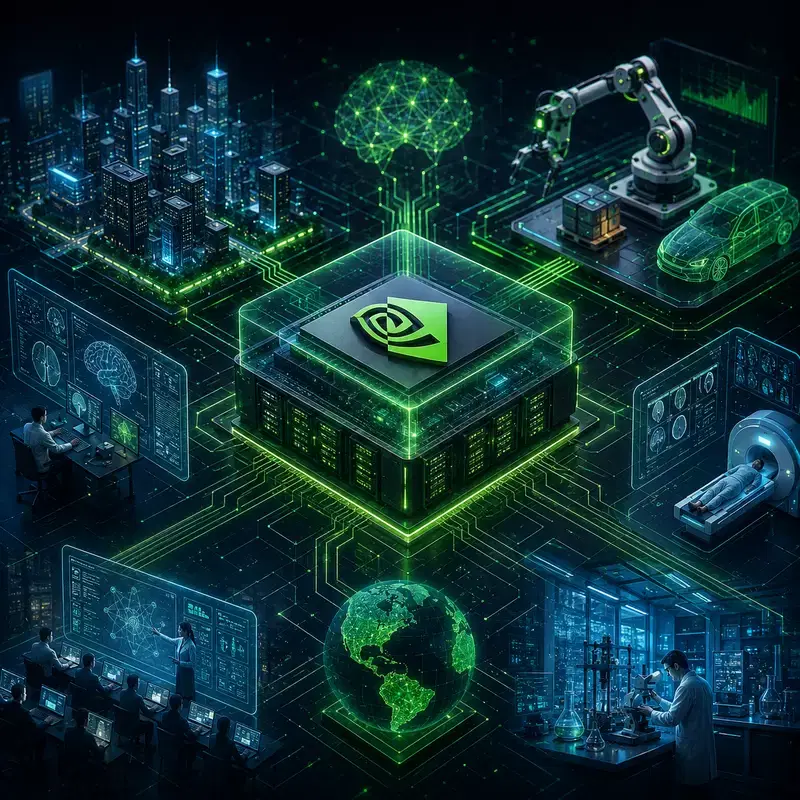
▲ NVIDIA (NVDA)/AI generated image
The debate surrounding NVIDIA's (NVIDIA, NVDA) $4 trillion valuation is shaking Wall Street's old methods of corporate valuation. The argument is that instead of focusing on immediate performance and current valuation levels, one should consider whether a company has captured the foundation of the new economy.
According to Benzinga, a U.S. economic media outlet, on July 9 (local time), Benzinga contributor Mehmet Yildiz argued that long-term investors should look beyond short-term stock prices and performance forecasts when evaluating companies that are building the foundation of new industries. He emphasized that major market news explains what has already happened, but a company's structure shows why long-term performance is created.
Recently, the assessment that NVIDIA could receive an attractive valuation compared to Apple (Apple, AAPL), Microsoft (Microsoft, MSFT), and Meta Platforms (Meta Platforms, META) was also presented as an example. Apple has built a consumer ecosystem, and Microsoft encompasses enterprise programs, remote computing services, and artificial intelligence (AI) businesses. Meta Platforms is expanding digital communication and advertising technologies. NVIDIA, the explanation stated, provides the computational foundation needed by research institutions, corporations, startups, universities, and medical innovation companies to develop new technologies.
Yildiz emphasized, "Products create revenue, but infrastructure creates dependence." He argued that the more businesses, universities, governments, researchers, and developers build their operations and research on a specific technological foundation, the harder it becomes to switch to other companies. He cited the developer ecosystem, research cooperation, adoption in educational settings, corporate relationships, intellectual property, and customer trust as long-term competitive strengths not directly reflected in financial statements. Yildiz described these strengths as "structural capital."
He also condensed five questions that long-term investors should ask. He explained that one should consider whether a company merely sells products or supports the birth of new industries, and whether management is looking at the next earnings report or the next technological era. It's also important to examine whether competitors only need to replace technology, or if they need to replicate the entire ecosystem, developers, partnerships, and trust. Key questions also included whether future value depends more on increasing dependence than simple demand, and which sectors of the economy would fail to function properly if the company disappeared.
Yildiz assessed AI conversational systems, automated task execution technology, robots, autonomous vehicles, scientific research, and medical innovation as surfaces of a larger structural change. He stated, "We should think not about companies that are performing well today, but about which organizations will be indispensable to the intelligent economy of the future." While the market determines the fair value of individual companies, he argued that long-term investment requires looking at the sustainable foundation a company is building rather than the products it currently sells.
[Article Key Summary]
-Mehmet Yildiz argued that long-term investors should evaluate whether a company is building the foundation of a new industry, rather than focusing on short-term performance and valuation levels.
-NVIDIA was presented as an example of a company providing the computational foundation for corporations, research institutions, and startups to develop their own technologies.
-Five questions were presented, emphasizing the need to consider ecosystem dependence, difficulty of replacement, long-term technological strategy, and economic indispensability, rather than just product sales.
*Disclaimer: This article is for investment reference only, and we are not responsible for any investment losses based on it. The content should be interpreted for informational purposes only.*
Newsletter
Get key news delivered to your email every morning
to leave a comment.