
to leave a comment.
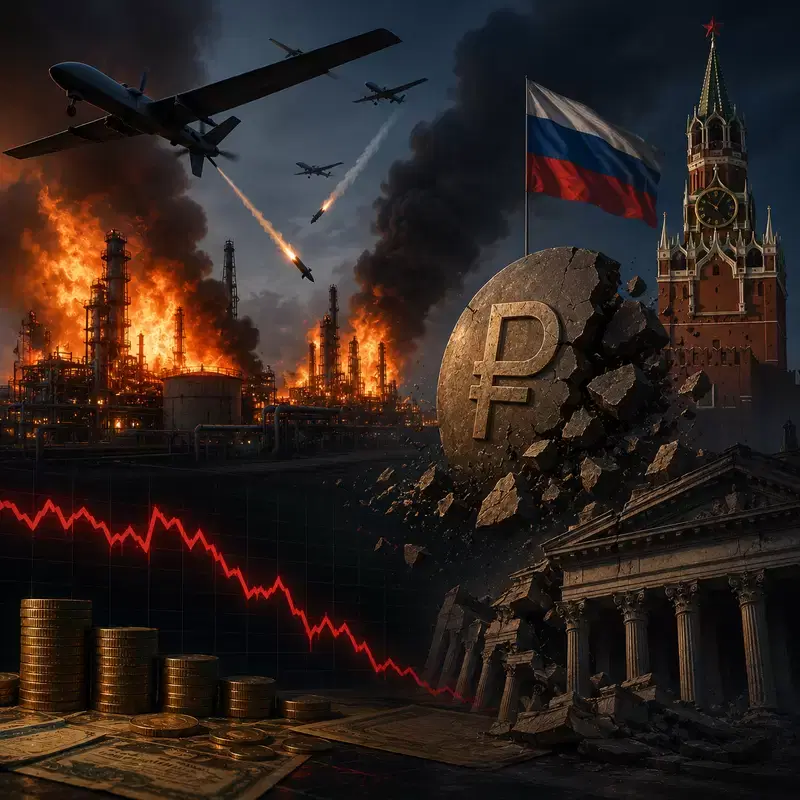
▲ Russia, interest rate decline, Ukraine war, drone attack / AI generated image
As Ukraine's long-range drone strikes crippled 25% of Russia's fuel production capacity, Russia's 10-year government bond yield surged to 16.62%. The shock, which began with refinery fires, is spreading to concerns about the trillion-dollar bond market and banking sector instability.
According to MarketWatch on July 7 (local time), Ukrainian long-range drones have attacked Russian targets 194 times this year. On Monday, Ukrainian forces attacked Russia's largest refinery in Omsk, about 2,500 km from the border, a facility responsible for 8% of Russia's total refining capacity.
The damage to refineries has shaken Russia's bond market. Russia's 10-year government bond yield jumped by approximately 200 basis points since early June, reaching 16.62%. MarketWatch pointed to inflation pressures due to rising energy prices and large-scale government bond issuance to fund the Ukraine war, which began in February 2022, as reasons for the sharp rise in yields.
Warnings surrounding the financial sector have also grown. A document prepared by a European intelligence agency regarding the possibility of a Russian banking crisis in 2026 indicated that 500,000 Russians went bankrupt last year, up to 15% of bank loans are non-performing, and this proportion is likely to increase further. The document described the risk to Russia's financial system as "explosive."
Radio Free Europe/Radio Liberty estimated that 25% of Russia's fuel production capacity has disappeared in the past 12 months, and two-thirds of all regions have introduced fuel sales restrictions. The Russian government lowered fuel standards to Euro-2 grade, which was banned in the country in 2013. Mikhail Khodorkovsky, a former Russian oil tycoon and opposition figure, pointed out that if refining capacity is halved, the gasoline crisis could shift to a diesel crisis, and Russia's harvest season is about to begin.
John Lough, a senior research fellow at the New Eurasian Strategies Centre, stated that predicting when or if the Russian economy will halt is an "unanswerable question." He assessed that it is difficult to calculate the time Russia needs to import refined fuel and whether Ukraine can attack faster than Russia can repair its refineries, adding that "a serious systemic crisis would take more than six months to take hold."
[Article Key Summary]
-It is estimated that 25% of Russia's fuel production capacity has disappeared in the past 12 months due to expanding Ukrainian drone attacks.
-Russia's 10-year government bond yield has surged by approximately 200 basis points since early June, reaching 16.62%.
-A European intelligence agency document assessed the risk to the financial system as "explosive," stating that up to 15% of Russian bank loans are non-performing.
*Disclaimer: This article is for investment reference only, and we are not responsible for any investment losses based on it. The content should be interpreted for informational purposes only.*
Newsletter
Get key news delivered to your email every morning
to leave a comment.