
to leave a comment.
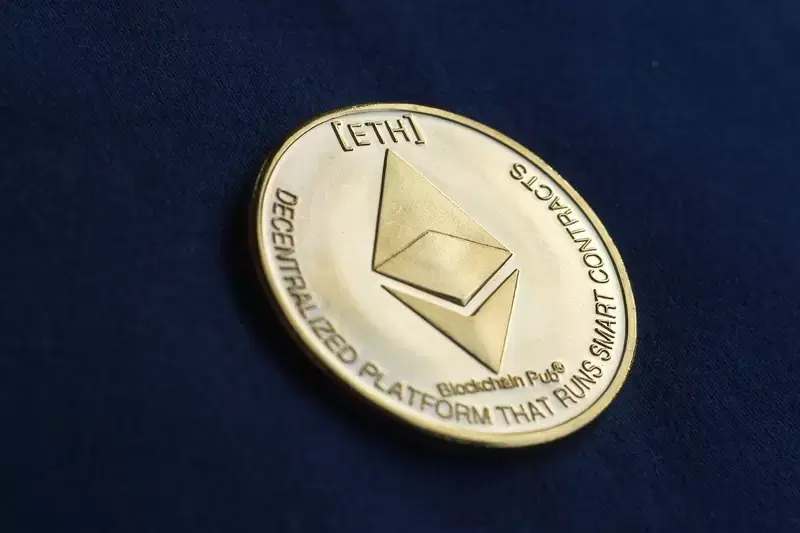
▲ Ethereum (ETH)
Ethereum (ETH) is recognized as a core infrastructure that has maintained its position as the second-largest cryptocurrency, but questions are growing as to whether it can sustain its current status until 2030 amid the pursuit of USDT, Solana, and XRP.
According to 24/7 Wall Street on May 26 (local time), Ethereum has maintained its position as the second-largest cryptocurrency by market capitalization for years and remains at the center of decentralized finance, non-fungible tokens, and smart contract activities. However, Solana (SOL) is pushing with low transaction costs, XRP is targeting the banking payment market, and USDT's market capitalization has increased by 622% over the past five years, significantly outpacing Ethereum's 11.75% growth. Polymarket reflects a 59% probability that Ethereum will lose its ranking before the end of 2026, a significant increase from 17% in January.
Ethereum still has a strong foundation. Its market capitalization is approximately $254 billion, ahead of USDT, which has a market capitalization of about $189 billion, and it accounts for about 33% of the entire real-world asset tokenization market. Of the approximately $320 billion in stablecoins circulating across all chains, about $150 billion is settled on the Ethereum mainnet. BlackRock launched ETHB on Nasdaq in March 2026, and the product was introduced as a major US Ethereum ETF allowing holders to receive staking rewards. Charles Schwab opened direct spot Ethereum trading to its 39 million account holders on May 13, 2026.
The pressure from challengers is increasing at different points. USDT is the closest contender by market capitalization, having grown as funds moved to stablecoins, which act as safe-haven assets during periods of risk aversion. Solana is targeting block finality of approximately 100 to 150 milliseconds through its Alpenglow upgrade, which is about 87 times faster than its current speed. The XRP Ledger recorded a net inflow of $1.12 billion over the 30 days ending May 13, while Ethereum and Solana both saw hundreds of millions of dollars in outflows during the same period. Boston Consulting Group predicts that the total value of tokenized assets on the blockchain could reach $16 trillion by 2030.
The background to Ethereum's wavering second-place status is a combination of capital outflows and the issue of mainnet revenue dispersion. US spot Ethereum ETFs recorded net outflows for 8 consecutive trading days from May 11 to May 20, with total outflows amounting to $431.86 million. In April, a net inflow of $355.98 million broke a five-month streak of outflows, but in May, $260.18 million was returned again. Standard Chartered calculated that transaction fees moving off the mainnet to Coinbase's Base alone reduced Ethereum's market capitalization by $50 billion. Goldman Sachs reduced its Ethereum ETF holdings by approximately 70% in Q1 2026, with total Ethereum exposure shrinking to about $114 million.
Ahead of 2030, institutional investors are closely watching the Bitcoin-to-Ethereum ratio, staking yields, and stablecoin payment dominance. Tom Lee's price framework is based on the Bitcoin-to-Ethereum ratio, which has an 8-year average of 0.0479 but is currently 0.0320, 33% lower than the long-term average. His low target price for 2030 is set at $12,000, and his bullish target is $22,000. BitMine has accumulated over 5.2 million ETH, holding approximately 4.3% of Ethereum's total circulating supply, and has staked about 90% of it through the MAVAN validator network, generating over $300 million in annual staking revenue.
24/7 Wall Street stated that it might be more important for Ethereum to maintain its status as a core payment layer in global finance than to retain its second-place position in 2030. The Glamsterdam upgrade's target has been adjusted from its original June schedule to Q3 2026 due to testnet delays, and it is set to introduce parallel transaction processing and a 78% reduction in gas fees. The gas limit per block will increase from 60 million to 200 million, with a target processing capacity of 10,000 transactions per second. Ethereum currently processes about 1,000 transactions per second, so if the upgrade works as planned, its processing capability will expand tenfold.
*Disclaimer: This article is for investment reference only, and we are not responsible for any investment losses based on it. The content should be interpreted for informational purposes only.*
Newsletter
Get key news delivered to your email every morning
to leave a comment.