
to leave a comment.
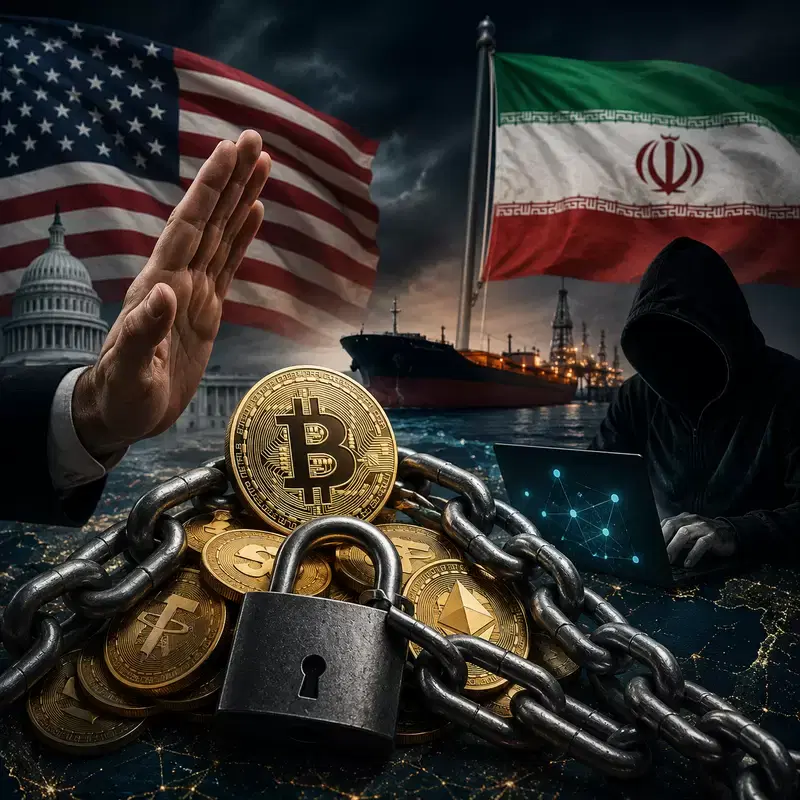
▲ US, Iran, cryptocurrency regulation, illegal cryptocurrency funds/AI-generated image
The United States has escalated sanctions to block Iran's use of cryptocurrencies. The U.S. Treasury Department, under 'Operation Economic Fury,' has frozen approximately $500 million in digital assets linked to the Iranian regime.
BeInCrypto reported on May 21 (local time) that the Donald Trump administration is intensifying pressure to prevent Iran from using cryptocurrencies. U.S. Treasury Secretary Scott Bessent stated last week that approximately $500 million in Iran-linked digital assets had been frozen, with $344 million of that amount included in seizures from the previous month.
The U.S. Treasury explained that this operation targets Iran's military, the Islamic Revolutionary Guard Corps (IRGC), regional proxy forces, and the shadow financial network used to move oil revenues. Bessent stated that Iran's shadow financial system facilitates the illegal transfer of funds for terrorist purposes, and that the U.S. is systematically dismantling Iran's shadow financial network and shadow fleet.
The largest single action was the freezing of $344 million in USDT on the Tron network, in cooperation with Tether. Previously, the U.S. also took action against Iran-linked British exchanges suspected of involvement in the movement of IRGC funds.
According to BeInCrypto, Iran is estimated to hold approximately $7.7 billion in digital assets. If this figure is accurate, Iran could rank among the top national cryptocurrency holders tracked by blockchain analytics firms.
Iran is increasingly utilizing Bitcoin (BTC) to move funds outside the traditional financial network. Tehran recently introduced 'Hormuz Safe,' a state-backed maritime insurance platform. This platform is structured to fully settle cargo ship insurance contracts passing through the Strait of Hormuz using Bitcoin.
U.S. authorities, contrary to concerns that cryptocurrencies could be used to evade sanctions, believe that their traceability in actual enforcement processes is advantageous for investigations. They explain that on-chain transactions leave a permanent record, allowing forensic firms to track wallets linked to the IRGC and the Central Bank of Iran.
The possibility of Washington using the card of blocking access to the U.S. banking network has also been raised. Industry sources stated that the U.S. could pressure cryptocurrency exchanges that handle Iran-linked fund flows by threatening to cut their ties with the U.S. financial system.
The strengthening of U.S. sanctions is directly targeting Iran's cryptocurrency loopholes amid rising tensions in the Middle East. With the Bitcoin-based maritime insurance platform and the estimated $7.7 billion in digital asset holdings, cryptocurrency has emerged as a key issue on the Iranian sanctions front.
*Disclaimer: This article is for investment reference only, and we are not responsible for any investment losses based on it. The content should be interpreted for informational purposes only.*
Newsletter
Get key news delivered to your email every morning
to leave a comment.