
to leave a comment.
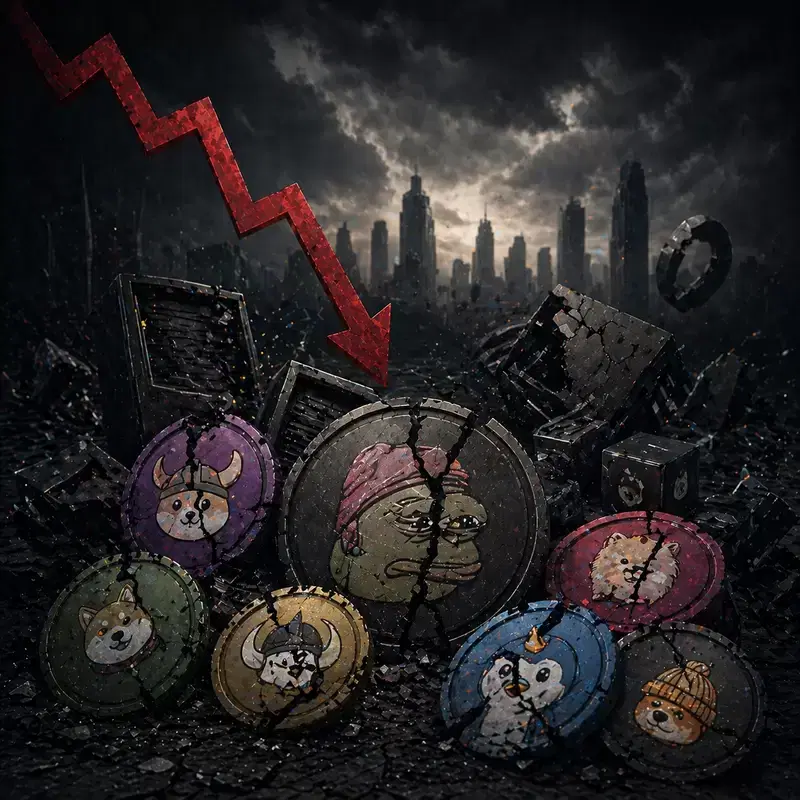
▲ Cryptocurrency decline, virtual asset project / AI generated image
Anthony Pompliano, known as a Bitcoin (BTC) supporter, claimed that most of the cryptocurrency industry is already dead and will not return. His remarks came after attending the Consensus Miami event for a day, pointing out that countless blockchains and tokens are creating only the illusion of survival without actual demand.
According to Benzinga, a cryptocurrency specialized media outlet, on May 8th, Pompliano stated in a podcast update that the natural business cycles that operate in traditional industries do not function properly in the cryptocurrency industry. He explained that in general industries, failed companies close down and investors move capital elsewhere, but blockchains are rarely terminated, and coins rarely drop to zero.
Pompliano pointed out that even one or two people can keep a “ghost chain” running, creating the illusion that the blockchain is still alive and being used. He added that “zombie coins” also lose most of their value and liquidity evaporates, but the token price never officially drops to zero.
He revealed that he asked the audience at the Consensus event if anyone believed that millions of cryptocurrencies would prosper in the future. According to Benzinga, no one raised their hand. Pompliano used this scene as evidence that even within the industry, confidence in the long-term viability of countless coins and blockchains is weak.
Pompliano also diagnosed a change in the demographic composition of the cryptocurrency industry. In the past, the industry was led by evangelists with strong convictions who prioritized Bitcoin's success over personal gain, but now there are more mercenary-type participants pursuing the greatest financial rewards. He cited fleeting meme tokens, fraudulent coins, recurring market manipulation, skyrocketing yield farming returns, and the launch of unfinished products aimed at garnering attention rather than solving real problems as examples of this shift.
The expansion of traditional finance was also presented as a factor narrowing the crypto industry's foothold. Pompliano pointed out that crypto-native companies are rapidly adding non-crypto areas such as stocks, prediction markets, options, and commodities. He believes they are realizing that they must expand beyond crypto to grow.
Pompliano asked, “Is Robinhood a crypto company or a traditional brokerage? Is Coinbase a traditional brokerage or a crypto company?” The implication is that as the lines between cryptocurrency and traditional finance blur, traditional financial institutions with capital and human resources are encroaching upon the territory of crypto companies.
Michael Saylor's remarks were also mentioned as an example of industry change. Benzinga reported that Saylor mentioned the possibility of selling Bitcoin to fund STRC dividend payments during Strategy's earnings call. Pompliano believes that while such a statement would have been considered blasphemous a few years ago, it is now accepted as a rational choice given the current industry situation. The fact that Bitcoin's price rose after Saylor's comments was also presented as a change that deviates from the traditional market narrative.
Pompliano argued that there are only four areas where value can be accumulated in the future. He identified Bitcoin, stablecoins, infrastructure, and tokenization as viable sectors. He judged that the remaining areas are in a difficult battle, having to compete with traditional financial institutions that possess massive capital and excellent human resources.
Referring to the “crypto carnival” booths at the Consensus event, he said, “We don't need more carnivals. We don't need more nonsense.” He then emphasized, “We need more people focused on building real solutions for real problems.” Pompliano's remarks sum up a warning that the cryptocurrency industry has moved past its speculative expansion phase and is entering a period of restructuring based on real-world use, liquidity, and competitiveness with mainstream finance.
*Disclaimer: This article is for investment reference only and we are not responsible for any investment losses based on it. This content should be interpreted for informational purposes only.*
Newsletter
Get key news delivered to your email every morning
to leave a comment.