
to leave a comment.
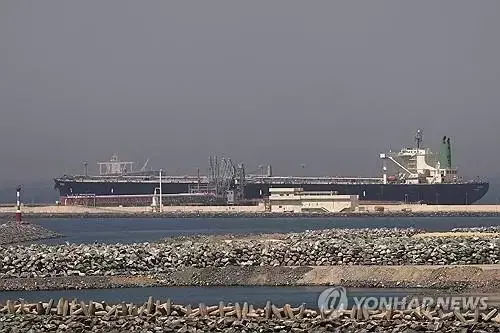
Cargo ship docked at Fujairah Port, UAE
International oil prices rose again on the 8th (local time) as armed clashes resumed near the Strait of Hormuz.
On this day, the closing price of Brent crude futures for July delivery on the ICE Futures Exchange rose by 1.23% from the previous session to $101.29 per barrel.
On the New York Mercantile Exchange, the closing price of West Texas Intermediate (WTI) crude futures for June delivery rose by 0.64% from the previous session to $95.42 per barrel.
However, on a weekly basis, Brent crude and WTI fell by 6.36% and 6.40%, respectively.
The reversal of international oil prices, which had been on a downward trend recently, is attributed to growing concerns that the ceasefire between the US and Iran could fall apart due to renewed clashes in the Strait of Hormuz.
On this day, the U.S. Central Command announced that it had neutralized two Iranian oil tankers attempting to break through the U.S. naval blockade and enter an Iranian port in the Gulf of Oman.
The day before, Iranian forces used drones and missiles to target three U.S. destroyers passing through the Strait of Hormuz, and the U.S. military responded by striking Iranian military facilities in self-defense.
Currently, the bilateral ceasefire remains officially in place, but small-to-medium scale armed exchanges continue, raising market tensions.
Experts analyzed that the market is overreacting to psychological factors and short-term news rather than actual supply and demand conditions.
Phil Flynn, Senior Analyst at Price Futures Group, pointed out that the market still tends to fluctuate with news headlines, stating that while shipping in the Gulf is relatively smooth within expected ranges, the market is reacting sensitively to localized variables rather than fundamental solutions.
Newsletter
Get key news delivered to your email every morning
to leave a comment.