
to leave a comment.
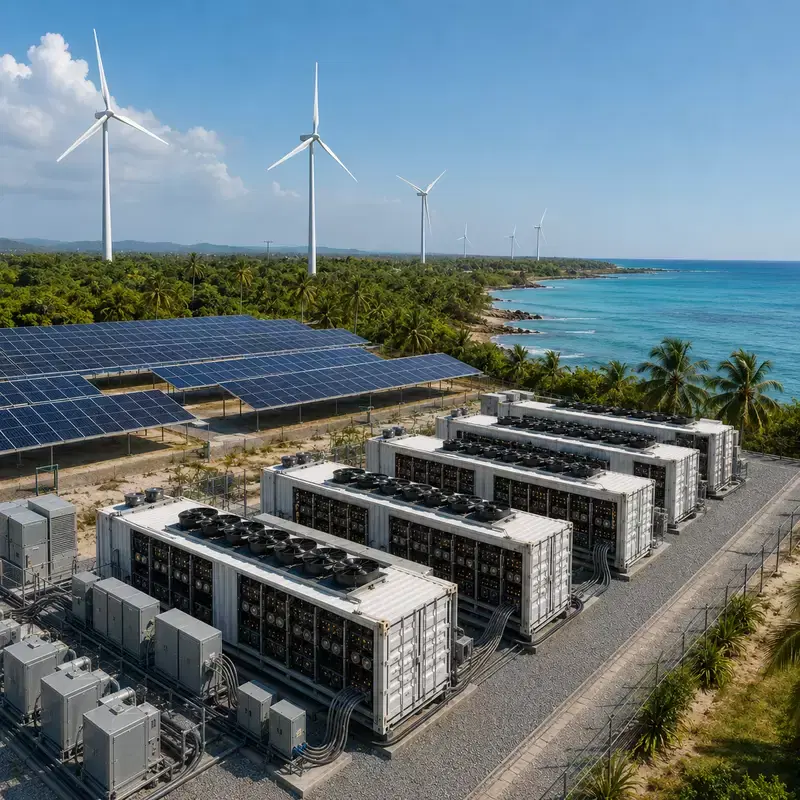
▲ Caribbean Sea, renewable energy, cryptocurrency mining/AI generated image
Colombia has unveiled a plan to develop its Caribbean coast into a Bitcoin (BTC) mining hub by utilizing surplus renewable energy, introducing a new variable to the South American mining landscape.
According to cryptocurrency media outlet Cointelegraph on May 6 (local time), Colombian President Gustavo Petro stated on X (formerly Twitter) that Colombia's Caribbean coast could become a Bitcoin mining hub by utilizing surplus renewable energy. President Petro suggested that Caribbean coastal cities such as Barranquilla, Santa Marta, and Riohacha could attract Bitcoin mining facilities.
President Petro said that the Bitcoin mining business could be a "huge impetus" for the development of the Caribbean region. He also proposed that the Wayúu community, Colombia's largest indigenous community primarily residing on the Caribbean coast, could be co-owners of the project.
Bitcoin mining analysts, including Jaran Mellerud, managing partner at Hashlabs, have assessed that the mining industry can generate significant economic effects when emerging countries convert unused electricity into cash flow. As commercial mining companies in the U.S. expand into artificial intelligence and high-performance computing to pursue higher profitability, there is increasing room for countries with low electricity rates to expand their share of the Bitcoin network's hashrate.
President Petro's remarks came after Alessandro Cecere of Luxor Technology mentioned the case of Paraguay. Cecere stated that Paraguay increased its Bitcoin hashrate share to 4.3% after utilizing hydropower from the Itaipu Dam. Paraguay is currently ranked as the world's fourth-largest Bitcoin mining country, following the U.S., Russia, and China.
According to a report published by the World Bank in April 2024, Colombia produces up to 75% of its total electricity from renewable energy sources. This is more than double the global average. Cointelegraph reported that by utilizing these renewable energy sources, Colombia could also alleviate President Petro's concerns that fossil-fuel-based Bitcoin mining could contribute to global warming and climate collapse.
However, President Petro's term ends in August. He has served as the President of Colombia since August 2022 and, due to constitutional restrictions, will not run in the next presidential election held on May 31. Data from the prediction market Kalshi suggested that left-leaning Senator Iván Cepeda Castro and conservative lawyer Abelardo de la Espriella, who advocates for free markets, are strong contenders to succeed him, but neither candidate has made clear public statements regarding Bitcoin or digital assets to date.
*Disclaimer: This article is for investment reference only and is not responsible for investment losses based on it. This content should be interpreted for informational purposes only.*
Newsletter
Get key news delivered to your email every morning
to leave a comment.