
to leave a comment.
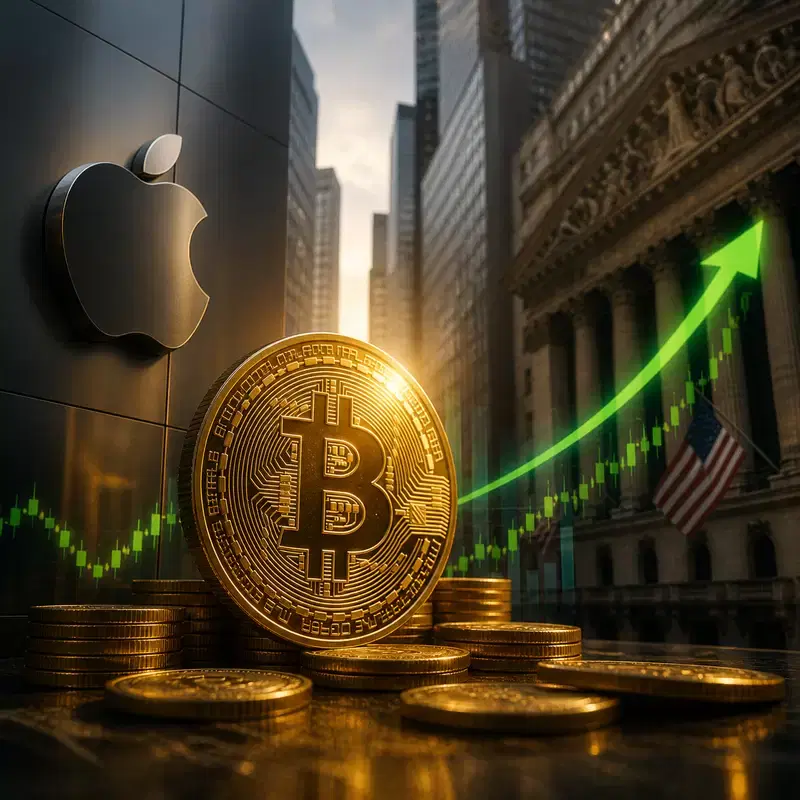
▲ Bitcoin (BTC), Apple (Apple)/AI Generated Image
As Apple pushed the New York stock market to an all-time high with a $100 billion share buyback, market attention is shifting to the structural upside potential of Bitcoin (Bitcoin, BTC), which has a fixed supply.
US economic media outlet 24/7 Wall St. reported on May 3 (local time) that Apple's announced large-scale share buyback plan pushed the S&P 500 index above the 7,200 mark for the first time ever. CEO Tim Cook announced the largest capital return policy in the company's history after reporting Q2 revenue of $111.2 billion. Since 2012, Apple has returned $850 billion to shareholders through share buybacks, strengthening a structure that boosts earnings per share. Amidst this trend, the S&P 500 recorded an all-time high of $7,230.12, and the Nasdaq reached $25,114.44.
In contrast, Bitcoin has remained around $78,381, down approximately 12% this year amid geopolitical risks in the Middle East and inflation concerns. However, it showed a rebound, rising 14% in April, and is currently about 38% lower than its October last year high of $126,000. It is noteworthy that even on May 1, when the stock market hit an all-time high, Bitcoin spot ETFs saw a net inflow of $629.8 million. BlackRock's IBIT alone attracted $284.4 million in one day, and all 13 spot ETFs showed positive inflows.
If Apple maintains its value by using cash to reduce the number of shares, Bitcoin has a structure where its value is maintained by code. Bitcoin's total supply is limited to 21 million, with approximately 20 million currently mined. The remaining supply is less than 1.1 million, and in April 2028, the new supply will again be halved. According to Fidelity, approximately 12% of the total circulating supply is held in spot ETFs and listed company vaults, locked up as long-term holdings.
With the stock market hitting all-time highs, an analysis suggests that a strategy of selling Bitcoin and moving into stocks is inefficient. This is because the S&P 500 has largely priced in major positive news, while Bitcoin remains at a discounted price compared to its previous high. If geopolitical tensions ease and inflationary pressures decrease in the future, Bitcoin is likely to show a strong rebound.
There are also forecasts that if regulatory environments are refined and macroeconomic variables stabilize, Bitcoin could rise to a range of $120,000 to $170,000 within the year. Amid continuous institutional capital inflows, Bitcoin's scarcity acts as a key factor in its long-term value appreciation.
*Disclaimer: This article is for investment reference only, and we are not responsible for any investment losses based on it. This content should be interpreted for informational purposes only.*
Newsletter
Get key news delivered to your email every morning
to leave a comment.