
to leave a comment.
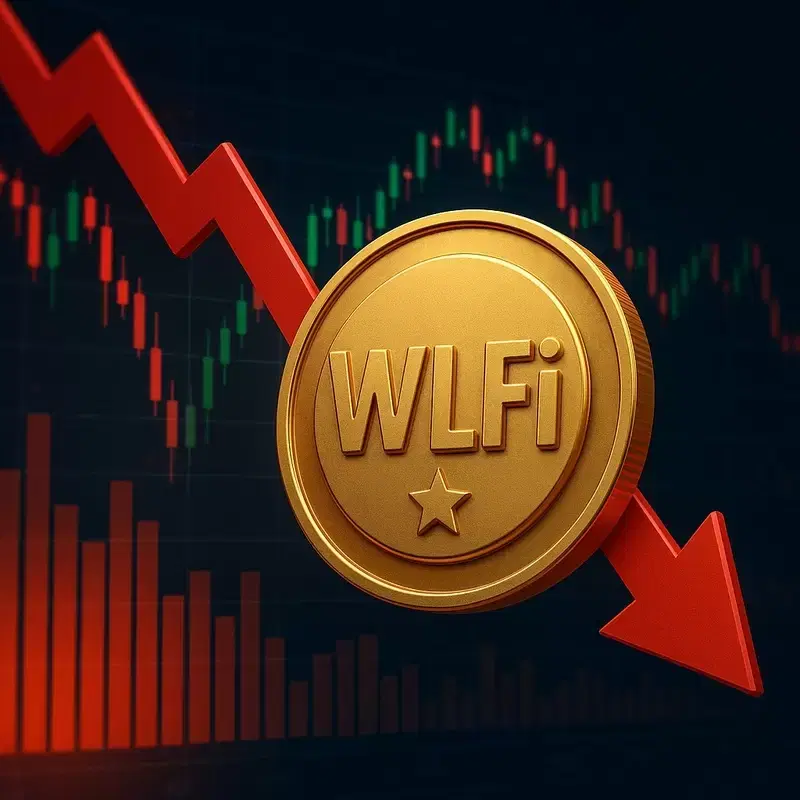
▲ WLFI/ChatGPT generated image
World Liberty Financial (WLFI), a virtual asset project linked to the family of U.S. President Donald Trump, faced strong market backlash, plummeting over 15% in a single day amid controversy surrounding a large-scale token lockup proposal.
According to cryptocurrency media outlet The Crypto Basic on April 30 (local time), WLFI announced a governance proposal to isolate over 62 billion WLFI from the market for a minimum of two years to control the circulating supply of recently listed tokens. The proposal, unveiled on April 15, primarily aims to curb immediate sell and buy pressure within the market.
Voting began on April 29 and is scheduled to run until May 7, with results so far showing overwhelming approval. Approximately 6 billion WLFI voted in favor, while only 3.2 million WLFI voted against, and the minimum quorum of 1 billion WLFI required for decision-making has already been met. If the proposal passes, early investors will receive their tokens in installments over an additional two years after a two-year lockup. Insiders, including founders and advisors, will be subject to stricter conditions, with a vesting period of up to three years after the initial lockup.
However, despite the apparent support rate, strong criticism is emerging from the industry. Simon Dedic, founder of Moonrock Capital, argued that this measure is virtually a rug pull targeting early investors. Justin Sun, founder of Tron, also a large WLFI holder, pointed out that this proposal is the most irrational governance decision he has ever seen.
Questions are also being raised about the voting structure and timing. Some point out that the token vesting schedule overlaps with the remainder of President Trump's term, and the possibility of tokens in wallets that did not participate in the vote being frozen for an extended period is also a concern. Among investors, dissatisfaction is spreading that the project is trying to artificially control liquidity to maximize profits.
World Liberty Financial attempted to ensure price stability through supply control but instead faced a backlash of eroded trust. As governance controversies intertwined with political influence expand, market uncertainty is likely to persist for some time.
*Disclaimer: This article is for investment reference only and we are not responsible for any investment losses based on it. The content should be interpreted for informational purposes only.*
Newsletter
Get key news delivered to your email every morning
to leave a comment.